EFT tapping is psychological acupressure. It combines ancient Chinese wisdom using our, energy meridians, the lifeforce that flows through in our body. If we have past trauma that didn’t fully release and we’re simply just trying to feel better without addressing it, then it’s probably going to still be running in our subconscious mind. So, EFT tapping allows us to clear it down to that subconscious level.
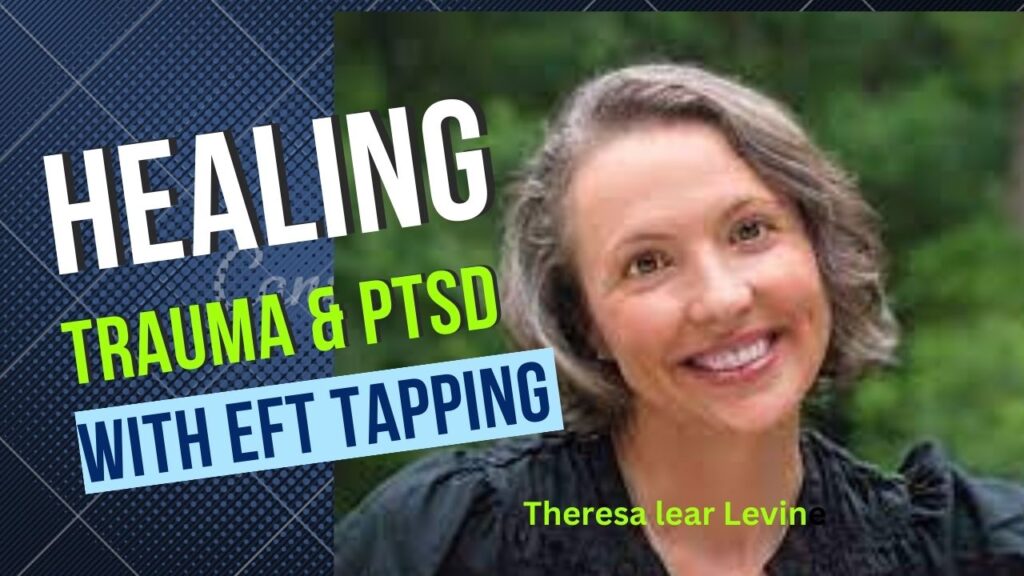
Theresa Lear Levine is the founder of Becoming More Me where she helps professional women to get out of their own way and resolve their innermost pains, traumas and challenges so they can fully enjoy their success and present moments. She does this by using scientifically proven methods that help them to release what’s currently holding them back and leverage their perceived weaknesses into superpowers.
Myrna: How did you transform personal struggles with past traumas, high functioning anxiety, and ADHD to becoming an EFT master practitioner and health coach?
And I think a lot of us can get into a pattern of comparing our traumas and thinking mine isn’t that bad. As I got into my 20s, and into my first marriage, and that ended in divorce after we had our first child, and there’s so much that needed to be worked through.
I remarried and had 3 more kids. And I think that’s when my ADHD really started to be more of a struggle for me, I couldn’t juggle as well. There was more to keep up with and after I had my third child, I started a business from home doing more, more of the coaching and things that I had been used to focus mainly then on like nutrition, fitness, that kind of stuff.
EFT has been around for decades. I have seen it used with Olympic athletes. I had seen it used with war veterans. I had seen it used with people who had worse trauma than me. It was that comparison again, where I was like, oh, I don’t need this modality. This isn’t what I need.
I was a mom of three or four kids at the time and I just wanted to sleep through the night not be stressed, feel more connected in my marriage. lose a few pounds, you know, just it seemed like basic things, but they were all adding up to and I didn’t realize that it was that same modality that helped war veterans or Olympic athletes. That could help me too.
And as soon as I opened up to that and realize the universal effectiveness and the scientific backing behind it and started using it, it was like that wall that was in front of me that was immobilizing me I was able to just cut right through it instead of trying to go around it or climb over it so it can be that really opened up the door because you can apply it then to pretty much anything and everything and I always find that when I’m working with people who are skeptical at first, the best of you apply it to something tangible.
Myrna; So, can we like expand on that? What exactly is, EFT tapping, and why does EFT have greater efficacy and speed than other healing modalities especially for trauma?
Theresa: EFT is a psychological acupressure you could say it combines ancient Chinese wisdom using our meridians our meridians are what our lifeforce flows through in our body, and we use these different points along them combined with modern day psychology. And by tapping our fingertips on these, Meridian points, the same point that if you were to go and have acupuncture done or a deep tissue massage, they will be inserting needles or pressing really hard. In EFT all we need to do is light fingertip pressure on some of these different points while we’re focusing on the negative thing or the challenge, and giving it a voice.
This allows the, energy blockage, to flow through. An energy blockage is the source of any disease we have in our body. It allows those things to break free so that we transform the way that we feel about things. And what is really cool about EFT is that whether it is something emotional, or physical, it’s effective on both. Whether it’s something that happened a really long time ago, something that’s happening in your life right now, or something that you’re worried or anxious about that hasn’t and may never happen in your life.
I always find that when I’m working with people who are skeptical at first, the best thing is to apply it to something tangible, something physical. That headache or a backache or something that you’re really going to notice a difference or a shift immediately versus other things that it’s equally effective on like money blocks or limiting beliefs or fears. It works, obviously without any needles like, meridians acupuncture, we’re just, tapping.
And it also addresses the negative which I think a lot of people choose to overlook these days. Everybody just wants to feel better, be positive, that toxic positivity is kind of crazy. And we can’t genuinely feel better and feel positively until we address the negative underlying things that are going on. And then once we do it’s kind of like tilling the field to plant seeds, you now have this fertile soil where that what you want to plant can actually grow versus getting overtaken by the weeds or the negative emotions so to speak, that are still there.
So, it really helps for that and when you’re thinking about it in the way of trauma. If we have a past trauma that didn’t fully release and we’re simply just trying to feel better without addressing it, then it’s probably going to still be running in our subconscious mind in one way or another. So, EFT really allows us to clear it down to that subconscious level. And to do so very gently. A lot of people, they’ve been through something really difficult or really traumatic in their past. It’s hard to talk about it and some forms of therapy can be traumatic themselves.
So, EFT is incredibly gentle. It’s amazing how much progress that you can get without even having to go into great detail or tell the entire story or anything else you can really start to shift things and feel differently and also to feel more comfortable without sharing more of it than you would without the, nervous system regulation.
EFT also works on a genetic level, like with epigenetic discoveries and things that are happening the way that our genes express can be affected by this type of work with, EFT tapping. There’s a lot of studies going on about that right now. But things that we thought were once unchangeable, like our genetics, were able to see how much power we have over changing even marine power.
Myrna: Dr Joe Dispenza’s work deals with epigenetics. You were talking about the, issues in our tissues, I have an episode on this topic, we do hold trauma in our tissues. Now, to the point where you just mentioned regarding the, meridian points, being almost the same as when you have acupuncture, I’ve never had acupuncture, but I’ve seen where they have the needles and things like that, but I don’t think I’ve ever seen needles in the head. And I was asked to do some, tapping, a few weeks back, and I was asked to tap on my head. Tap above my breastbone and then tap certain points in my head. So can we talk about where normally that people tap.
He made this accessible to everybody. So, the main points that we’re using in EFT are:
If you hit all those spots, while focusing on that one thing that’s bothering you, and you’re hitting all those spots, well voicing it in the right way and everything else, then you’re going to clear the energy around the issue because you’ve used all of those different spots. That’s not to say that you can’t clear it with just one like that.
The collarbone point is one of my favorites, one that you mentioned, a lot of times when I’m just sitting here talking with people, I’ll just tap my collarbone or when I’m doing initially meeting with clients, a lot of times they start to share more you know emotional things and they’ll start to get choked up, and I’ll just say, hey, let’s just tap or collarbones while we’re talking.
Myrna: So that’s amazing. So when you do the, EFT tapping, you’re combining tapping with, talk therapy. And while you talking the energy is passing through your body? Is it like the energy that’s in our, chakra systems, or are this is more than emotional energy?
Theresa: Yes, and yes, both. I love that. I mean, if you’re familiar with the, chakra system, we can talk about that because even when my clients have no idea what an, energy portal, or the, chakra system, is, I still am using that behind the scenes in my own understanding of what’s going on with them. And for those that want to geek out on it with me, I’m always sharing little tidbits. But our chakra system is beautifully engineered.
It all has to do with the energetic container that you have created in your energy system and your chakras. So, I am always looking at those lower chakras to see what happened when a client’s nervous system from their earliest years. The things that you know their inner child has been through or their inner teen or their inner young adult, their inner anybody up until this present moment.
EFT can be used like a band aid and it can also be used for that like deeper wound cleanout when you want true healing. So, in the case of fear of flying, let’s say that you’ve never done, EFT tapping, before and you’re getting ready to get on a plane. It’s not like you have time to meet with me a few times and actually get to the root of it and figure it out. But you do have time to do some of the band aid style tapping where you could feel a heck of a lot better on that flight and feel a lot more relaxed with some stuff that just addresses the in the moment feelings that are happening. The negative energy and so on and so forth.
But let’s say on your first leg of the trip and you’ve still got to fly back. You probably are gonna need to do the exact same thing when you fly back because we didn’t get to the root of the problem. We just calmed things temporarily for you, but that’s beautiful and valuable. It’s kind of like when people go to see a psychiatrist to work on things and they get prescribed a medicine so that they can relax enough to actually be able to do the work. It is the equivalent of the medicine that allows you to relax enough to do the work.
Women in particular, need to have, EFT tapping, in their toolbox.
Evidence-based treatments include trauma-focused cognitive behavioral therapy (TF-CBT), EMDR, somatic therapies, mindfulness-based approaches, and other trauma-informed therapies. The best approach varies depending on the individual and their experiences.
Trauma is a significant risk factor for both anxiety and depression. Many people experience persistent worry, fear, sadness, emotional numbness, or hopelessness following traumatic experiences.