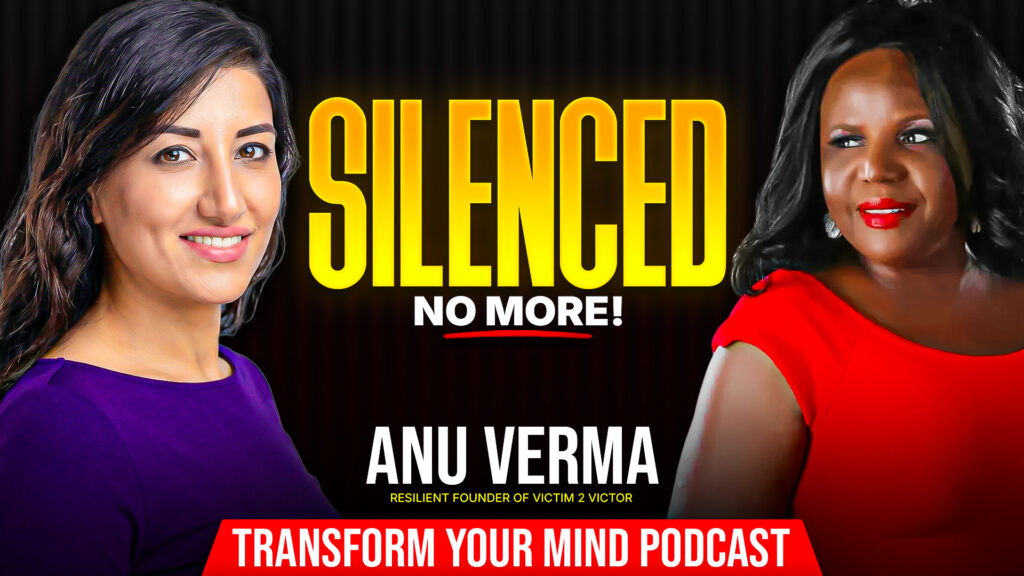
Myrna Young welcomes Anu Verna, a complex trauma recovery coach, to explore the transformative journey from victim to victor. Anu shares her experiences of childhood sexual abuse and domestic violence. Revealing how unresolved complex trauma manifested in her adult life through low self-worth, addiction, and toxic relationships.
Discover how Anu reclaimed her voice, penning the memoir “Victim to Victor” and developing the film “Silent Screams.” This episode delves into healing, courage, and the power of telling your story. Offering hope and insight for those seeking to overcome their past.
Key Takeaways
- Unresolved complex trauma isn't a life sentence; transformation and healing are possible with courage and persistence.
- Self-awareness and the power of storytelling are pivotal tools for reclaiming one’s life.
- The journey from victimhood to victory is one of self-discovery, empowerment, and change.
The Silent Journey of Healing Complex Trauma
Complex trauma casts a long shadow over a person’s life. Often manifesting as unresolved pain, self-destructive behaviors, and an endless search for validation. The conversation with Anu Verna on the Transform Your Mind podcast illuminates these struggles with raw honesty and opens a dialogue on healing.
This profound discussion outlines how unresolved trauma isn’t a judgment on character but a call for healing. As Myrna Young, host of the podcast, explores, the journey from victim to victor is marked by the reclaiming of one’s voice, truth, and, ultimately, freedom.
Key Aspects of the Healing Complex Trauma
Inner Work & Self-Love:
Tools for Empowerment:
- Mindful Awareness: Paying attention to thoughts to challenge limiting beliefs.
- Purposeful Action: Breaking down challenges into small, achievable steps.
- Support & Connection: Seeking support from therapists, mentors, or support groups.
- Narrative Ownership: Reclaiming your story to become the hero rather than the victim.
The Path to Healing Childhood Trauma
- Survive: Transition from complex trauma to a stabilized, safe state.
- Process: Work through grief and traumatic memories.
- Rise: Take responsibility for healing and cultivate resilience.
Journey from Pain to Purpose
Anu’s journey exemplifies the potential for profound change when one chooses to confront their childhood trauma. “I was just a magnet for more abusers. “ She explains, referring to the cycle that many who have faced similar experiences find themselves in. Her story is a testament to the possibility of change.
An encouraging reminder that complex trauma doesn’t have to have the final say in someone’s life. By reclaiming one’s narrative, as Anu did through her powerful memoir and upcoming film, Silent Screams. Survivors can move from silence to a place of empowerment.
Complex Trauma Symptoms
Myrna Young highlights the nuanced struggles linked to Anu’s experiences with trust, self-esteem, and self-worth. These challenges underscore a universal theme in complex trauma recovery. The complexity of rediscovering one’s identity post-trauma. “Complex trauma symptoms includes: overworking, overachieving, because, you know, you need that feeling of validation to feel accepted.” Anu remarks, shedding light on why many survivors immerse themselves in work or destructive habits as a distraction from unresolved pain.
This conversation emphasizes that self-awareness is crucial in breaking free from destructive cycles. Recognizing patterns and understanding the root causes of one’s emotions and decisions are integral steps toward healing. Anu describes her turning point as a realization born from confronting her self-destructive relationships and acknowledging her unresolved complex trauma-a transformative awakening that led her to empowerment and recovery.
Storytelling: A Catalyst for Change
The power of storytelling as a healing mechanism reverberates throughout the conversation. Anu’s narrative not only amplifies her voice but also serves as a catalyst for change, both individually and communally. “It’s not just about me,” she affirms, highlighting a universal truth that when individuals share their stories, ripples of change resonate far beyond the personal.
Furthermore, the acknowledgement of societal and cultural pressures, particularly within Anu’s traditional Indian upbringing, underscores the additional hurdles many face when addressing complex trauma. Her resolve to break the silence-through her memoir, her film, and her podcast-serves as a powerful reminder of the strength found in vulnerability.
The interview’s broader implications are profound, as they offer hope to those grappling with similar struggles while challenging societal norms that often silence victims. By creating a platform for these essential conversations, both Anu and Myrna provide tangible proof that healing is possible and that telling one’s story can indeed save one’s life.
In a world where trauma often leads to isolation and silence, transforming one’s life through truth and vulnerability is both revolutionary and necessary. The insights shared remind listeners of the power they hold within to redefine their narratives. As we reflect on this inspirational dialogue, there is a realization that healing is a journey-a journey of restoring one’s voice, purpose, and zest for life.
Sponsors of this Podcast
- Spark Energy + Focus is your go-to pre-workout ritual when you need reliable energy to power through the day. drinkspark.com and use code TRANSFORM for 30% off and free shipping.
- With Wegovy at Hers, lose up to 20% or more of your body weight when combined with diet and exercise. Visitforhers.com/transformto get personalized, affordable care that gets you.
- Quince is a casual luxury brand priced fifty to eighty percent less than similar brands. Refresh your everyday with luxury you'll actually use. Head to Quince.com/tym for free shipping on your order.
Silenced no More: How to Reclaim Your Voice and Heal Trauma
Somatic and Vocal Techniques for Healing
- Humming and Toning: Simple vocalizations, such as humming or making long sounds like “AHHH,” stimulate the vagus nerve and help break the “freeze” response.
- Breathwork: Slow, intentional breathing signals to the nervous system that you are safe.
- Somatic Therapy: Working with professionals to release bodily sensations of trauma.
Reclaiming Your Narrative Through Action
- Journaling Your Truth: Writing allows you to express your truth without pressure, helping you process anger, pain, and hope.
- Private to Public Sharing: Begin by speaking in safe spaces-talking to a trusted friend or therapist-before trying to speak publicly.
- Small Assertions: Practice setting boundaries by saying “no” or “I disagree” in small, low-stakes situations.
- Mirror Work: Affirm yourself out loud in a mirror to reconnect with your sense of self, saying things like “My voice matters”.
Mental and Emotional Shifting
- Self-Compassion: Reclaiming your voice is not about forcing, but allowing yourself to be honest about your experience without judgment.
- Acknowledging Without Shame: Recognize that your silence was once a protective mechanism, and you can now safely let it go.
FAQ’s
What is childhood trauma?
Can childhood trauma affect adult relationships?
What are fight, flight, freeze, and fawn responses?
What are Adverse Childhood Experiences (ACEs)?
Why do trauma survivors become people-pleasers?
Additional Resources
- Anu Verna's Website: Victim 2 Victor
- Anu Verna on Instagram and TikTok: Search "Victim to Victor"
- Anu's Book: Victim to Victor available on Amazon
- Podcast: Search "Victim to Victor" on major podcast platforms
This episode provides a poignant narrative on overcoming adversities tied to trauma. Listeners are encouraged to engage with Anu’s transformative story and to seek out her platform for resources and ongoing support. Don’t miss this insightful conversation, stay tuned for more compelling content from the “Transform Your Mind“ podcast.