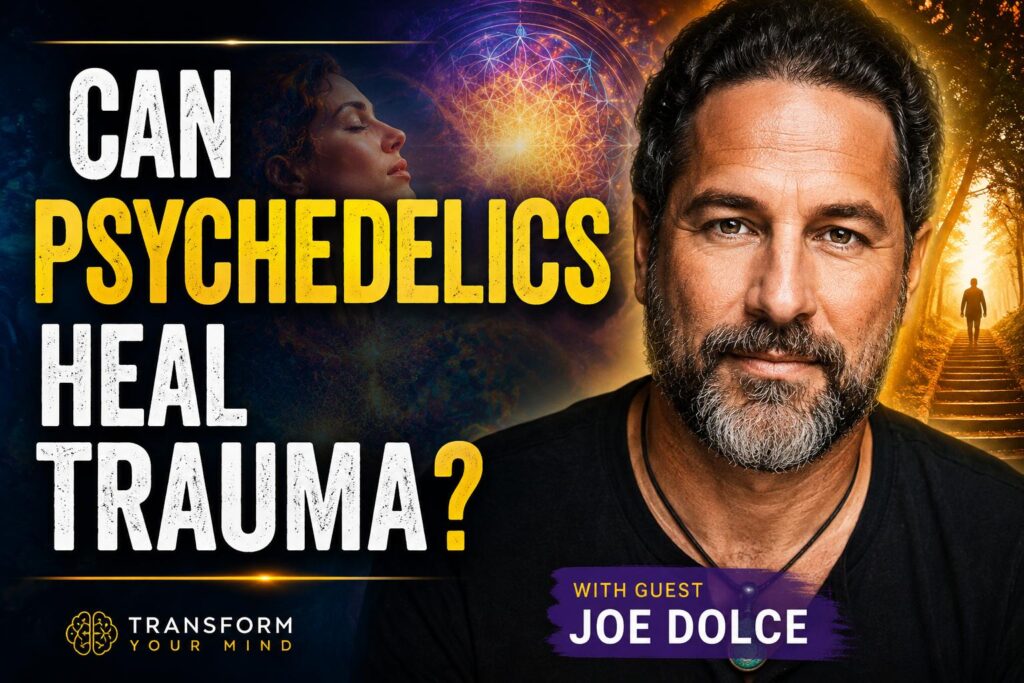
Can psychedelics truly heal trauma, or are they simply another escape from pain?
On the Transform Your Mind podcast, guest Joe Dolce explores the hidden side of psychedelics in therapy – the hope, the risks, the transformation, and the emotional realities many people never talk about.
Key Takeaways Psychedelics in Therapy
- Non-Specific Amplification: Psychedelics are non-specific amplifiers, enhancing existing mental states rather than imposing new ones.
- Mindful Exploration: The importance of responsible use and integration in harnessing psychedelics for mental health improvement.
- Therapeutic Potential: Evidence-backed insights into how psychedelics can aid in treating conditions like PTSD, depression, and addiction.
The expanding dialogue around psychedelics marks a transformative era for mental health treatment, drawing both interest and skepticism. With historical stigmas fading and scientific inquiry advancing, there’s a pressing need to distinguish genuine therapeutic potential from speculative narratives. Joe Dolce, a reluctant entry into this psychedelic world, offers a balanced inquiry into the promises and pitfalls through an evidence-based lens.
What Is Psychedelics in Therapy?
- Psilocybin (magic mushrooms)
- MDMA-assisted therapy
- Ketamine therapy
- Ayahuasca
- LSD in clinical research settings
Psychedelics and Trauma Healing
People who experience childhood trauma, abuse, neglect, or emotional wounds often develop survival responses that continue into adulthood. These responses may include:
- Anxiety
- Hypervigilance
- Depression
- Emotional numbness
- Addiction
- Chronic stress
- Difficulty trusting others
- Shame and self-sabotage
The Hidden Side of Psychedelics in Therapy: Mental Health and Psychedelics
- Proper guidance
- Therapeutic integration
- Emotional safety
- Medical supervision,
- Psychedelic-assisted therapy
- Experienced facilitators
Psychedelics Are Not Magic Pills
Can Psychedelics Help PTSD and Childhood Trauma?
- Reduced anxiety and depression
- Greater emotional openness
- Increased self-awareness
- Improved relationships
- Reduced fear responses
- Greater connection to purpose and spirituality
- “I am not safe.”
- “I am broken.”
- “I am alone.”
Psychedelics in Therapy Risks
- Emotional distress
- Psychological overwhelm
- Re-traumatization
- Dependency on spiritual experiences
- Unsafe facilitators or environments
- Mental health complications for vulnerable individuals
Psychedelics are not recommended for everyone, especially individuals with certain psychiatric conditions.
The Nine Major Psychedelics in Therapy
- LSD (Lysergic Acid Diethylamide): A highly potent, lab-made ergoline derivative. Even in microgram doses, it produces intense, long-lasting visual and auditory alterations.
- Psilocybin: The primary psychoactive compound found in over 200 species of “magic mushrooms”. Once ingested, the body converts it into psilocin, resulting in profound changes to mood and perception.
- DMT (N,N-Dimethyltryptamine): A powerful, naturally occurring tryptamine that is found in many plants and animals. When inhaled or injected, it produces an extremely short, intensely immersive experience.
- Mescaline: A naturally occurring phenethylamine primarily sourced from the peyote cactus and the San Pedro cactus. It has a long history of traditional use in Indigenous ceremonies in the Americas.
- Ayahuasca: A traditional South American brewed tea. It combines plants containing DMT with an MAOI (monoamine oxidase inhibitor), which allows the DMT to be orally active and results in an hours-long visionary state.
- 5-MeO-DMT: A naturally occurring compound found in certain plants and the venom of the Incilius alvarius (Colorado River) toad. It is an exceptionally strong, short-acting psychedelic that often produces profound ego dissolution.
- 2C-B: A synthetic phenethylamine created by Alexander Shulgin in the 1970s. It acts as a bridge between classic psychedelics and entactogens, often producing vivid visual geometry combined with emotional openness.
- MDMA (Ecstasy/Molly): A synthetic phenethylamine that acts primarily as an empathogen/entactogen. While it causes mild perceptual shifts, it is best known for inducing strong feelings of empathy, connection, and euphoria.
- Salvia (Salvinorin A): Derived from a Mexican mint plant (Salvia divinorum). Unlike the other drugs listed, it is a dissociative that affects opioid receptors, typically resulting in brief but highly intense, reality-altering hallucinations
Healing Is Still an Inside Job
One of the most powerful truths about trauma recovery is this:
No substance can do the healing work for you.
Whether someone chooses traditional therapy, faith, meditation, nervous system work, coaching, or psychedelic-assisted therapy, transformation still requires courage and self-awareness.
- learning to regulate emotions
- creating healthy relationships
- rebuilding self-worth
- processing grief
- practicing self-compassion
- changing destructive patterns
From Trauma to Transformation
- Not just symptom management.
- Not just survival.
- But from trauma to transformation.
to move from pain to purpose,
from brokenness to wholeness,
and from trauma to transformation.
Understanding Psychedelics as Non-Specific Amplifiers
Psychedelics are often misunderstood, but a crucial insight is their nature as non-specific amplifiers. “Psychedelics aren’t imposing anything on the mind; they’re amplifying things that are already in the mind,” Joe Dolce explains. This notion underscores their potential across various mental health conditions, such as depression, PTSD, and addiction, by highlighting existing thoughts and behaviors rather than creating new ones.
This amplification allows individuals to confront and reframe unresolved trauma or habits. For instance, Joe discusses ibogaine, a psychedelic currently gaining traction in treating veterans with PTSD and traumatic brain injuries. “[Ibogaine] opens a critical period of learning… creating a state of openness that allows transformation to occur,” he describes. Such revelations enable individuals to rethink their trauma within a safe, supportive environment that might otherwise not be possible through conventional therapies.
Dolce’s perspective emphasizes that psychedelics in therapy do not inherently heal but facilitate an environment where healing is possible. Integration-alongside proper therapeutic support-plays a pivotal role in assimilating these experiences into one’s mental framework for long-term benefits.
The Rise of Guided Psychedelic in Therapy Sessions
Contemporary approaches to psychedelics in therapy often involve guided sessions, which bring structure and safety to the experiences. Joe provided fascinating insights into psilocybin sessions and MDMA-assisted therapy, emphasizing context and careful preparation. “Under guidance, psychedelics allow you to uncover things… new ways of perceiving things out of the way you normally perceive them,” he explains.
In a guided setting, a person is more likely to harness therapeutic breakthroughs and access layers of consciousness previously inaccessible. “MDMA enables you to say the things you’re afraid of saying… it increases levels of empathy,” Dolce continues. This supportive setting assures that the individual is not overwhelmed, providing a conducive psychological environment for profound insights to surface.
However, he cautions about the necessity of preparation and aftercare, reinforcing, “You cannot just take a psychedelic and fix yourself… you need the support.” Such sessions enable individuals to integrate learned insights into daily life, emphasizing the balance between experiencing psychedelics and deliberate introspection.
Mental Health and Psychedelics: Impacts on Mental Health and Broader Implications
The resurgence of psychedelics in therapy carries broader implications, particularly concerning mental health treatment’s future. As Dolce mentions, “mental illness is a big thing, and apparently, these drugs help.” Decades of rigid drug policies are giving way to clinical studies and practical applications with promising outcomes.
Across the discourse, there’s a notable recognition of psychedelics’ potential to open “new neural pathways” and modify entrenched patterns. He notes, “We’re in a different phase of psychedelics now,” referencing ongoing scientific research across prestigious institutions. Now, places like Texas are investing heavily in psychedelic research, particularly for veteran care, reflecting a shifting paradigm in therapeutic healing models.
Yet, the significance extends beyond mere treatment. Dolce’s sharing implies a shift in societal attitudes towards substances long stigmatized, fostering acceptance and understanding of their nuanced roles in cognitive and emotional healing.
Reflections on the Exploration of Psychedelics in Therapy: Ketamine Therapy
Navigating psychedelics in mental health is not solely about the compounds but the contexts they are used within. This thoughtful exploration necessitates an understanding that psychedelics amplify existing mental constructs, enabling breakthroughs when combined with therapeutic support.
As public curiosity grows, separating myth from reality is crucial. For Dolce, psychedelics pose questions about our inherent mental states and suggest that “our minds are not fixed, our patterns are not permanent.” The possibility of modifying neural pathways reveals both the promise and the responsibility inherent in these transformative tools like Ketamine therapy.
The conversation with Joe Dolce underscores a pivotal moment for psychedelics-balancing hope with hype, empirical research with spiritual experiences. As the dialogue continues, the need for nuanced understanding and mindful application remains central to truly transforming mindsets and, subsequently, lives.
Sponsors of this Podcast
- Spark Energy + Focus is your go-to pre-workout ritual when you need reliable energy to power through the day. drinkspark.com and use code TRANSFORM for 30% off and free shipping.
- With Wegovy at Hers, lose up to 20% or more of your body weight when combined with diet and exercise. Visit forhers.com/transform to get personalized, affordable care that gets you.
- Quince is a casual luxury brand priced fifty to eighty percent less than similar brands. Refresh your everyday with luxury you'll actually use. Head to Quince.com/tym for free shipping on your order.
Final Thoughts
About the Guest:
FAQ's
What is PTSD?
What are the symptoms of PTSD?
What causes PTSD?
Can childhood trauma cause PTSD later in life?
What is the difference between PTSD and Complex PTSD?
Additional Resources
- Joe Dolce's Book: Modern Psychedelics: The Handbook for Mindful Exploration
- Follow Joe Dolce: LinkedIn
- Follow Joe Dolce: Instagram
- Rewiring Trauma: Healing the Brain Body Connection