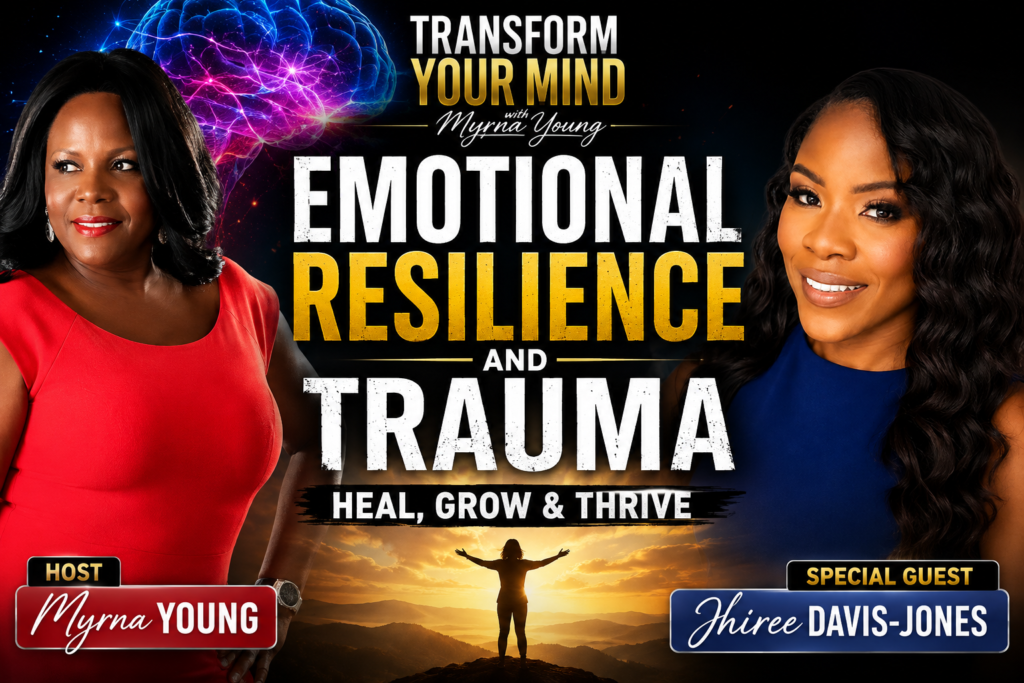
Join host Myrna Young and guest Jhiree Davis Jones, a licensed professional counselor and founder of Cherry Blossom Healing, as they explore the concept of trauma and resilience and its significance in overcoming life’s challenges. Coping skills from trauma increase resilience because they help people learn how to properly handle uncomfortable emotions and reactions that result from trauma. Jhiree shares personal insights from her own journey, including honoring her grandmother’s legacy and overcoming childhood trauma. They discuss cultural perceptions of therapy, especially within the Black community. The importance of a therapeutic process beyond mere talk therapy. Gain valuable perspectives on planning, resilience, and personal growth from this insightful conversation.
Key Takeaways
The Power of Emotional Resilience after trauma: Learn how to navigate through life’s adversities with resilience, emerging stronger rather than broken.
Therapy and Cultural Stigma: Understand the critical need to dispel misconceptions around therapy, especially within the Black community, to foster healing and mental well-being.
From Pain to Purpose: Discover how acknowledging and processing past trauma can lead to personal growth and purpose-driven lives.
Understanding Emotional Resilience and Trauma
In the enlightening conversation between Myrna Young and Jhiree Davis Jones on the Transform Your Mind podcast, the central theme revolves around trauma and resilience. A crucial yet often overlooked skill in life’s journey. Jhiree defines emotional resilience as “the willingness to keep going even through adversity, the willingness to keep going even after pain.” This resilience is not about avoidance but rather the conscious decision to face challenges head-on. Allowing oneself to feel and process emotions and channeling those experiences into personal growth and strength.
Myrna and Jhiree dive into the complexities of emotional resilience, emphasizing its importance not only in the face of personal setbacks and professional challenges but also in overcoming historical and systemic adversities. Jhiree explains, “It’s about reaching back, teaching people what their choices look like.” Underscoring the active role individuals must take in managing their emotions and reactions.
The broader implications of trauma and resilience extend beyond personal development. In today’s fast-paced and often unpredictable world. Building this skill can enhance mental health, improve relationships, and drive success by fostering a mindset prepared to handle change and uncertainty.
Emotional Resilience and Trauma: How to Thrive Amidst Adversity
Challenging Misconceptions Around Therapy
A significant barrier to emotional resilience is the lingering stigma surrounding mental health therapy, particularly in the Black community. Myrna and Jerry address this head-on. Highlighting the misbelief that therapy is only for the “crazy” or for people who are inherently flawed. Jerry eloquently notes, “Therapy was always seen as just being for the crazy people,” pointing out the cultural preconceptions that hinder individuals from seeking the help they need.
The conversation further explores how these misconceptions prevent many from experiencing the healing benefits of therapy. Jhiree passionately argues for a shift in perspective: “Therapy is about letting the therapist in and about feeling safe enough to do that.” She recognizes that there’s a historical context where keeping family matters private was prioritized. She advocates for openness as a conduit to healing, stating, “By doing things like this, we’re seeing more of our faces.”
The dialogue also touches upon the broader consequences of these misconceptions. Embracing mental health care can offer profound societal benefits by reducing stigma. Encouraging constructive dialogue and fostering environments where emotional health is prioritized and accessible.
From Trauma to Triumph: Harnessing Personal Pain
The podcast beautifully connects personal stories to larger life lessons, specifically examining how trauma can serve as a catalyst for transformation. Jerry openly shares her personal journey of experiencing abandonment and childhood trauma due to her mother’s addiction issues. Rather than succumbing to these adverse beginnings. She explains how she used these experiences to fuel her passion for therapy and helping others.
“A living witness,” as Jerry describes herself, she’s walked the path from pain to purpose, a journey she details in her book, My Current Past From Pain to Purpose. Her narrative serves as a powerful example of how acknowledging one’s past and using it as a well of strength rather than a pit of despair leads to empowerment.
For listeners and broader audiences, Jhiree’s story is a universal reminder that trauma does not have to define one’s future. Instead, it can be redirected into a force for good, driving personal achievements and assisting others on similar paths.
Synthesizing Insights from Trauma and Resilience
In the Transform Your Mind podcast, Myrna Young and Jhiree Davis-Jones emphasize the importance of emotional resilience, especially when dealing with childhood trauma. These lessons illuminate broader themes of personal growth and societal change. The podcast underscores the necessity of addressing and redefining cultural stigma around mental health therapy. Encouraging open conversations and accessibility.
The episode’s exploration of these themes is not merely theoretical but grounded in Jhiree’s personal journey, reflecting how resilience, therapy, and an unyielding spirit can transform one’s life. By understanding and embracing emotional resilience, acknowledging past traumas, and challenging cultural misconceptions. Individuals and communities can truly embark on a path of healing and empowerment.
This insightful dialogue encourages a reevaluation of how we perceive mental health care. Urging a focus on healing and personal growth. Essential for thriving in today’s complex world. By embracing these powerful messages, we can foster a more understanding, resilient, and supportive society.
Core Pillars of Trauma and Resilience
- Social Connection: Cultivating a supportive group of peers, family, or community members to reduce isolation.
- Regulated Routines: Implementing predictable daily schedules, proper sleep hygiene, and physical exercise to stabilize the nervous system.
- Somatic Awareness: Tuning into the body’s physical sensations to release the biological imprint of stored stress.
- Purpose & Perspective: Finding meaning or connecting to a larger cause, which fosters hope and a forward-looking mindset
Understanding the Relationship between Trauma and Resilience
- Not mutually exclusive: A person can experience severe trauma symptoms while simultaneously demonstrating high resilience in specific areas of life. Such as maintaining work performance.
- Dose-response dynamic: Higher exposure to positive experiences, strong support systems, and coping skills can directly counteract the negative impacts of large doses of trauma.
- Post-Traumatic Growth (PTG): Beyond just returning to a baseline level of functioning (resilience), trauma can sometimes trigger profound personal transformation. Resulting in deepened relationships, a renewed sense of purpose, and a changed outlook on life
FAQ’s Trauma and Resilience
- No. Resilience is not the absence of suffering.
- Normal response: Resilient individuals still experience deep grief, anxiety, panic, or hypervigilance after a traumatic event.
- Active adaptation: Resilience means navigating through these difficult emotions and gradually recovering baseline functioning. Rather than remaining stuck in a chronic trauma response.
- No. Resilience is not a permanent personality trait or a genetic “all-or-nothing” quality.
- Dynamic process: It is a dynamic set of skills, behaviors, and environmental supports that can be learned, practiced, and strengthened by anyone at any point in life.
- Resilience: Bouncing back to your original baseline of health and functioning after a crisis.
- Post-Traumatic Growth: Moving beyond the original baseline to experience positive, transformative psychological shifts, such as finding a new life purpose, deepening spiritual connections, or developing greater personal strength because of the struggle.
- Yes. Resilience is highly context-dependent.
- Compartmentalization: An individual might show immense resilience at work by remaining highly productive, yet struggle with severe trauma responses in personal relationships or physical health.
5. How does trauma affect the brain, and how does resilience help heal it?
- Trauma impact: Trauma over activates the survival brain (amygdala), keeping the body in a constant state of fight, flight, or freeze, while shutting down logical thinking (prefrontal cortex).
- Resilience impact: Practicing resilience strategies—like mindfulness, therapeutic processing, and secure social connections—promotes neuroplasticity. This rewires the brain, calming the overactive survival response and restoring emotional regulation.
- Strong social connections.
- The power of relationships: Research consistently shows that having at least one stable, committed relationship with a supportive caregiver, partner, friend, or mentor is the most critical buffer against the long-term toxic effects of trauma
Additional Resources
Resources:
Link to Transcript
Cherry Blossom Healing: Visit Cherry Blossom Healing to learn more about their services and connect with Jhiree Davis Jones.
Social Media Handles: Follow Cherry Blossom Healing on Instagram and Facebook: @CherryBlossomHealing.
Book: “My Current Past: From Pain to Purpose” by Jhiree Davis Jones, available on Amazon and Barnes & Noble.
Be sure to tune into this episode to gain valuable insights on building emotional resilience and the importance of mental health awareness.