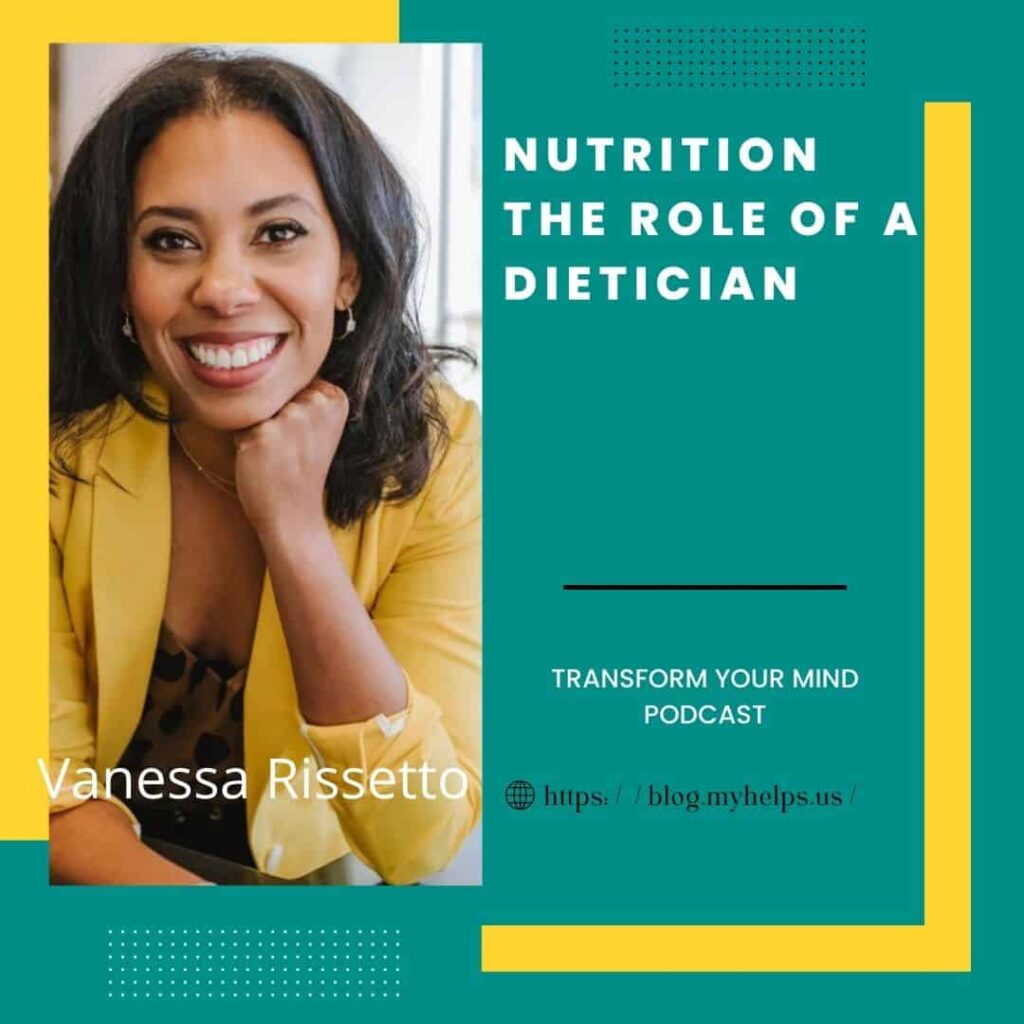
Why is Nutrition the foundation of health and longevity? In this post on the ultimate guide to nutrition, Dietician Vanessa Rissetto teaches us about macronutrients, vitamins, hydration, balanced diet, how to have better energy and overall health. This nutrition guide is the study of nutrients in food, how the body uses them, and the relationship between diet, health, and disease. A Dietitian, play a really big role in people’s overall health. It’s not just about, weight loss. Proper, nutrition, can reduce the burden of disease, prevent and reverse disease.
Download the podcast here
Bio
As the co-founder of Culina Health, Vanessa’s magic lies in her realistic and personalized approach to nutrition. With science as her first love, she is interested in helping clients to take an active role in their health journey with the help of her expertise: personalized lifestyle plans backed by evidenced-based, science-driven nutrition counseling, adult weight management, and building a better relationship with food. Vanessa received her MS in Marketing at NYU and completed her Dietetic Internship at Mount Sinai Hospital where she worked as a Senior Dietitian for five years.
Nutrition guide: The basics of good nutrition
Myrna: You said science is your first love? Can you share your journey into becoming a registered, dietitian?
Vanessa: Nutrition, is a discipline, in and of itself. And, nutrition, is a modality that elicits change. We know that anecdotally, and we are now starting to track data around that. So a, dietitian, play a really big role in people’s overall health. It’s not just about, weight loss, I think that’s the old narrative. A, dietitian, is not somebody who is very elite and unattainable, and unaffordable.
So, if you can’t afford, dietitian, and you’re all relegated to being, unhealthy, and that’s not the case, and we do much more than just manage some of the weight. Proper, nutrition, helps if you have, diabetes, if you have, kidney disease, cancer, or a nursing mother, and you want to help increase your milk supply. All of these things, a, dietitian, can help you with. People don’t realize this, and we also take insurance.
Sponsored Ad
Having bad credit and being denied credit every time you apply for anything can be extremely frustrating and embarrassing. Bad credit may be a problem, but there is a solution: Back on Track Financial: You can improve your credit scores with Back on Track Financials’ credit development program, which helps you fix and build your credit. Their number one priority is boosting your credit scores by removing negative items from your credit and educating you on how to establish and manage your credit file. Back On Track has the roadmap to getting your scores within the 700-800 range. Aren’t you tired of fantasizing about the car you could drive, the house you could live in, or the business you could start?
Turn your dreams into reality by getting back on track today. Back on track has experience removing everything from large items such as bankruptcies and student loans down to small items like medical bills collections and hard inquiries. They have removed it all.
Macronutrients and micronutrients
Macronutrients
- Essential nutrients required in large amounts.
- Provide energy and building blocks for the body.
- Include carbohydrates, proteins, and fats.
Micronutrients
My company Culina Health does take insurance. 91% of the patients that we see all exercise their insurance benefits. So, the services of a, dietician, is basically a luxury service that you’re not even really paying for. And using the help of a, dietitian, is going to help you with your, nutrition, will help extend your life. That’s what a, dietitian, is there for.
The physician will save your life and the dietitian, will keep you healthy.
Myrna: That’s true the ultimate guide to nutrition, is a big thing. I remember reading a book. I think it was Deepak Chopra’s book, Perfect Health and he was saying that everybody should have a nutrition guide, everybody should have something or someone like a dietician, who tells them about, the ultimate guide on nutrition. I like that your specialty, or your modality is you want to call it a science-based nutrition.
That’s working with how their body processes and things, because one of the things I also learned is that the digestive system, is just as unique as your fingerprint.

Hydration: The Forgotten Nutrient
Hydration: The Forgotten Nutrient” highlights that water is a critical, often overlooked nutrient essential for life, supporting functions like temperature regulation, nutrient transport, waste removal, and joint lubrication. Water loss is constant through bodily processes, making consistent intake crucial, and its absence can lead to severe health issues or death. Factors like age, weather, and production level influence water needs, and maintaining adequate water intake is vital for both human and animal health.
Myrna: Everybody has a different, digestive system. So, I’m sure a, dietitian, is somebody that can help you with that. I went to a dietitian, once because my cholesterol was high. I know the ultimate guide to nutrition including hydration plays a big role in fighting, cancer. What made you decide to go into the dietitian, field?
Vanessa: I studied biology in college, but I just didn’t become a doctor for whatever reason. I went to a, dietitian, myself, in college, I had gained 50 pounds, because I didn’t know anything about food. My mother wasn’t somebody who thought about calories. We didn’t have a scale in our house. And so I ate the food that my mother cooked every single day. And that was it. And I never had a problem with my, weight, and I didn’t overthink the food that I ate.
Ultimate Nutrition Guide: The Role of Fiber
Fiber is an essential nutrient that plays a crucial role in maintaining overall health and well-being. Here are the key roles of fiber:
- Fiber adds bulk to stools, promoting regular bowel movements and preventing constipation.
- It feeds beneficial gut bacteria, which helps maintain a healthy microbiome and reduce inflammation
We know that soda has chemicals and copious amounts of sugar. And it can affect your, weight, in a negative way. And so I gained all this, weight, in college. For me vegetable carbohydrates worked with my, digestive system, so I lost all the weight, but I didn’t really understand how. I knew that a dietitian, would be the person to tell me, so I went and met with a dietitian, her name is Keri Glassman, she’s a good friend of mine to this day. She gave me this ultimate nutrition guide in a very pragmatic way.
How food affects your body. If this is your goal, this is what and how you should eat. And so it gave me clarity on what I was doing. I went on to lose another 15 pounds, not even because I was trying, but because I started to piece together how she recommended eating. It wasn’t a restrictive prescription. It was you need to have a protein, a fat and a carbohydrate, every single meal. And I thought, wow, I could offer this service for other people. That seems very exciting and interesting. I started taking classes again on the ultimate guide to nutrition and going on this journey to become a dietitian.
Sponsored Ad
African Abroad Date. Com where Africans meet. Are you Living away from home and would love to meet someone from your country and culture? Living away from home can be both lonesome and stressful especially when we leave family behind. African Abroad Date was founded with Africans di-as-po-ra in mind and our mission is to make finding love easy, fast, and convenient for all. If you can relate to this and happen to be single, searching, and residing in the U.S., join africanabroaddate.com today to connect, meet, and date African men and women from around the world. Don’t delay Did I mention it’s free!” That website again is africanabroaddate.com

The Dietician Ultimate Nutrition Guide
Myrna: That’s awesome. You know, a lot of people become life coaches, because they were, life coaching, clients. So, you became a dietitian, because you liked your, dietitian. But alright, let’s dissect that a little bit. The advice from your, dietician, was to eat a balanced meal. She told you that you should have carbohydrates, fat, and protein at every meal.
Would that be considered, intuitive eating, or, prescriptive eating? So what I want to understand that even though we’re all different, our bodies are all different scientifically. How does one size fit all? When you talk about, prescriptive eating, which means that everybody was following the same pattern, they have carbohydrates, proteins and fats at every meal. What does, prescriptive eating, look like?
Prescriptive eating involves dietary plans created to manage or treat specific health conditions, often prescribed by healthcare professionals like doctors or dietitians. This can include therapeutic diets for diseases such as diabetes or kidney disease, “food prescriptions” that provide healthy produce to low-income families, or specialized diets for veterinary patients with medical needs. The goal is to use food as a targeted form of therapy to improve health outcomes, manage symptoms, or prevent disease progression.

Prescriptive eating plans from a dietician
Vanessa: Prescriptive eating is if I tell you how and what to eat. If I tell you how to put the pieces together, that’s going to lead you down a path towards, prescriptive eating.
Intuitive Eating, on the other hand is just knowing what works for you and only eating those foods. That works for some people and it doesn’t work for others. Some people need more guardrails like, prescriptive eating, and other people don’t. Your first experience with food depends on what on your how you were raised.
- Did you grow up food insecure?
- Does your mother have an eating disorder?
- Did your parents use food to bribe you?
- Are you constantly made to feel ashamed because you are overweight or underweight?
Sponsored Ad
Tax season is here. Are you looking for a financial advisor, or tax planner? Then check out Hamilton Express Tax Services. We provide unparalleled personalized accounting services to a broad range of clients across all 50 states. We are ready and able to serve and guide you along your path to success.
We offer advances up to $6000, free E-File, audit protection and representation. We are accepting new clients; W-2s, independent contractors, students, and self-employed individuals.
Allow us to show you why we are rated five stars on google reviews. Head over to hamiltonexpresstax.com to file this year’s taxes. You can also check us out on Instagram or Facebook @hamiltonexpresstax that website again is hamiltonexpresstax.com

Creating a Balanced Plate: The role insulin plays in nutrition
These are all the psychological factors and components that play and so, dietitians, have to understand the patient and every person is individualized. And that’s why like we at Culina Health provide, personalized nutrition. So, for example, if you were a type two, diabetic, I would counsel you an entirely different way, than somebody who comes to me and says, all I do is think about food every single day and what I’m eating like every minute of every day, I’m thinking about what I’m eating. Well, that’s, that’s an eating disorder. And so, we need to deal with that in a very different way.
But if you’re a type two, diabetic, it’s completely reasonable for me to say carbohydrates, affects your blood sugar, they raise your blood sugar, they tell your liver, store fat. When the blood sugar is raised, your pancreas mobilizes insulin. Insulin helps to bring the carbohydrate in the cells; that’s a storage hormone. So that’s also going to affect your weight.
So, let’s figure out how much carbohydrate you can have at every meal. How does carbohydrates affect you later on in the day. Some people have no problem eating carbohydrates at breakfast and lunch, but eating it at dinner is a problem. Some people, that’s not how it works, they need to eat their carbohydrate earlier in the day. So it just depends on your, digestive system.
Nutrition Guide for Different Life stages
- Birth to 6 months: Exclusive or partial breastfeeding is recommended, or infant formula.
- 6 to 12 months: Introduce solid foods, focusing on nutrient-dense options like pureed fruits, vegetables, and cereals.
- Children: Provide a balanced diet with carbohydrates for energy, healthy fats for development, and fruits and vegetables for the immune system.
- Rapid Growth: This is the second stage of rapid growth after infancy, requiring high levels of energy, protein, calcium, vitamin D, iron, and zinc to support growth spurts and bone development.
- Balanced Diet: Encourage a variety of foods, including dairy, lean proteins, nuts, and whole grains to provide energy and aid focus.
- Young and Middle Adulthood: Focus on a diet rich in fruits, vegetables, whole grains, and lean proteins to maintain muscle mass, bone density, and cognitive function.
- Pregnancy and Lactation: There are increased requirements for certain micronutrients. A balanced, nutrient-dense diet is crucial for both the mother and developing baby.
Nutrition Guide Older Adulthood (Elderly)
- Lower Energy Needs: Older adults generally need fewer calories due to lower metabolic rates and less lean body mass.
- Increased Calcium and Vitamin D: Bone mass decreases with age, making adequate calcium and vitamin D intake important for bone health and fracture prevention.
- Vitamin B12: Stomach acid production decreases with age, affecting vitamin B12 absorption; fortified grains or supplements may be necessary.
- Hydration: The sensation of thirst can decline with age, increasing the risk of dehydration. Water, low-fat milk, or fortified soy beverages can help meet fluid needs.
General Recommendations for All Life Stages
- Nutrient-Dense Foods: Prioritize whole foods like fruits, vegetables, and whole grains.
- Mindful Eating: Being mindful of portion sizes helps maintain a healthy weight.
- Stay Hydrated: Drink plenty of fluids, especially water.
So even though there’s a prescription for eating, it’s still intuitive to you and your life and your cycle. You know, what is going on with you. So, let’s make that fit.
Myrna: To me, Intuitive Eating, is eating following your preferred diet and maybe tweaking it a little bit. Because either you’re, diabetic, or you’re not, or you want to build muscle, or lose weight etc. So, prescriptive eating, is what you would counsel someone to do, like a meal plan.
Vanessa: Whatever your goal is, maybe your goal is that you just want a better relationship with food. So okay. that’s different than you have type two, diabetes, and we need to control your blood sugar. So I’d probably lean more prescriptive if I need to control your blood sugar.
Intuitive eating, is just following your normal diet. If you’re from the Mediterranean or Caribbean Islands, intuitive Eating, is just honoring your body and, how you feel during the day nothing is off limits. We can eat whatever we want, we just have to understand how the food is affecting our body.
The Link between Nutrition and Mental Health
The connection between nutrition and mental health is well-established. Research has shown that the foods we eat can significantly impact our mood, cognitive function, and overall mental well-being.
How Nutrition Affects Mental Health:
- Nutrients:
Essential nutrients such as omega-3 fatty acids, B vitamins, and magnesium play a crucial role in brain health. Deficiencies in these nutrients can contribute to mental health problems like depression, anxiety, and cognitive decline.
- Processed Foods:
Diets high in processed foods, sugary drinks, and unhealthy fats have been linked to increased inflammation, which can negatively impact brain function and mood.
- Gut Microbiome:
The gut microbiome is a complex community of bacteria that communicates with the brain. A healthy gut microbiome produces beneficial neurotransmitters and hormones that support mental health.
- Fiber and Antioxidants:Fruits, vegetables, and whole grains provide fiber and antioxidants, which can reduce inflammation and protect brain cells from damage.
Nutrition Guide for Weight Loss
Myrna: You say that understanding what we eat is influenced by many factors. social, emotional, and psychological. So, talk to me about that. How does the ultimate nutrition guide fit into someone’s, diet plan, for, weight loss?
Vanessa: People go between contemplative and action, they vacillate between the two often, and so it’s our job as, dietitian, to recognize that, and really meet people where they are. Because if they think that they’re in action mode, but really, they’re in contemplative or pre contemplative mode, they will not be successful achieving their goals. It’s our job to help them understand where there are in the process. If I give you, diet plans, and every week you have excuses why you didn’t complete them you are in the contemplative state, so let’s step back.
Because we don’t want you to feel negatively about this experience, or that you’re not able to achieve your, weight loss, goals you’re just not ready. And that’s okay. So those are like those psychological components. And psychological and behavior, they sort of go hand in hand. And that’s a big piece of this. We need to really understand our patients, how they behave, why they behave in the way, and how we can support them, so that they can achieve success.

Your history with food
What is your relationship with food? How were you treated as a child? How do you feel around food? How were you first introduced to food? Do you know, what are your preconceived notions about food? Those things are also important.
Myrna: So, you’re talking about someone coming to see you, and they have a goal, either to be healthier, or they have an illness, like cancer, or even, something like Crohn’s disease. So there’s certain foods that they can’t eat. So, when that person comes to you, you work with them on their social, I’m assuming that social means they go out a lot, eat fast food or not drinking water. Emotional, maybe their relationships. Some people eat when they are lonely or heartbroken etc. And I guess the psychological question is you ready to do the work to make a change?
I know someone who is overweight and his wife is always trying to get him to pay attention to his weight and food, but he’s not there yet. He doesn’t have what it takes to make that commitment to eat healthier.
Weight isn’t a predictor of mortality
Vanessa: Yeah, he’s not ready if people are constantly talking about his, weight, then that’s the thing for him. So, this happens to a lot of people, I’m just using him because I know. But I do know that I see a lot of people that are overweight, and you’re thinking, well, why aren’t they doing something about it?
They’ll say, oh, that’s healthy, or unhealthy? And then you’re going to get sick at some point in time? Well, I think people are not ready. I mean, we know that weight, isn’t necessarily a predictor of morbidity and mortality, and some people choose to live in a larger body. And they’re happy with that. And so that’s that.
So, we just, we recognize that, and we noticed that it’s not a one size fits all. And sometimes you just have to say to people, hey, let’s not let’s talk about the weight. You came here because your, cholesterol, is elevated. But we have to do things to make the cholesterol, go down. So, I want to change the way that you eat in these ways.

Getting Professional Help: Cholesterol reduction plan from your dietician
Your current diet is that you don’t eat breakfast, and then at night you overeat cookies. Let’s come up with something that you will eat that’s really easy and accessible. Let’s say it’s an English muffin with peanut butter for breakfast. You eat that for breakfast that every single day for three months and you only eat two cookies at night. I promise you your, weight, will have gone down and your lab will have gone down.
You can also lower your, cholesterol, if you had chia seeds or some berries, with almond milk, that would actually keep you full. And that’s upping the fiber content, because fiber helps to draw, cholesterol, away from the body.
Meal plan:
- two tablespoons of chia seeds,
- one quarter cup of oats,
- half a cup of berries, you’d probably be somewhere in the vicinity of 15 grams of fiber. And that’s only at breakfast.
- add vegetables at lunch and dinner,
- and another piece of fruit paired with a fat like nuts; you would get to about 30 grams of fiber. If we focus on 30 grams of fiber every single day, that will lower your, cholesterol. You don’t have to eat oats, but it’s just a quick vehicle for the fiber.