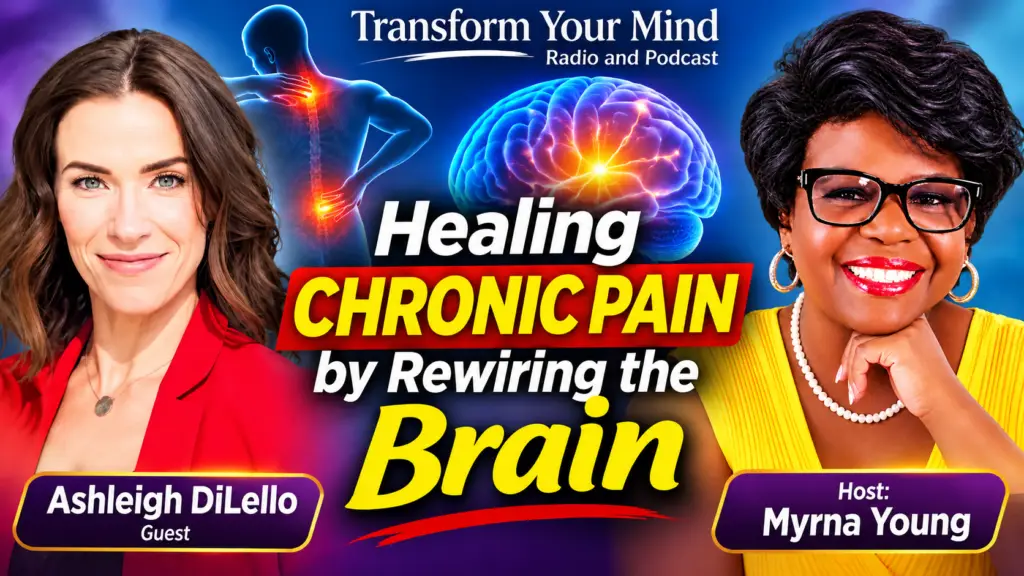
What if the key to healing chronic pain isn’t found only in treating the body, but also in understanding how the brain responds to pain, trauma, and emotional stress?
Millions of people live with persistent pain, anxiety, and unresolved trauma. They try medications, physical therapies, and different treatments, yet sometimes their symptoms continue long after the original injury has healed.
Could the brain and nervous system be playing a role?
On the Transform Your Mind podcast, I sat down with Ashleigh DiLello, creator of Bio Emotional Healing, to explore how neuroscience, neuroplasticity, and nervous system regulation may help people change their relationship with chronic pain and trauma.
Ashleigh’s story is extraordinary. She survived a life-threatening illness as a teenager, returned to professional dancing, and later faced another devastating health crisis after hip surgery left her with debilitating nerve pain.
Her experiences led her to study neuroscience and develop an approach to healing that addresses the relationship between the brain, body, emotions, and stress responses.
Her central message is that our past experiences can shape our nervous system, but they do not necessarily have to determine our future.
Healing Chronic Pain: Ashleigh DiLello’s Remarkable Journey
A Life-Threatening Illness at Age 13
Ashleigh’s first encounter with serious illness began when she was just 13 years old.
A passionate dancer who had trained since childhood, she suddenly became critically ill with a mysterious condition that doctors struggled to diagnose.
After extensive testing, physicians suspected a severe viral infection, but they could not identify its exact cause.
Her organs were beginning to fail, and doctors feared she would not survive.
For four years, Ashleigh fought to regain her health.
During our conversation, I asked what gave her the determination to keep going when the medical community had run out of answers.
Her answer was faith.
She believed her life had a purpose beyond her illness, and her love of dancing gave her something to work toward.
Eventually, her family explored nutritional and holistic approaches alongside the medical care she had received.
Her recovery was gradual. After four years of severe illness, she needed another two years to regain enough strength to dance again.
Ashleigh credits a combination of determination, faith, lifestyle changes, and supportive care for helping her through that experience.
Bio-Emotional Healing: Rewiring the Brain for Chronic Pain
A Second Health Crisis: Chronic Nerve Pain
Years later, Ashleigh experienced another devastating setback.
Following hip surgery, she developed severe chronic nerve pain that dramatically affected her mobility and quality of life.
Once again, she faced medical uncertainty and discouraging predictions about her future.
But this time, she had something she didn’t have during her teenage illness: firsthand experience of overcoming a seemingly impossible health crisis.
She began exploring how the brain processes pain and how emotional stress influences the nervous system.
Her studies eventually led her to develop Bio Emotional Healing, an approach that combines her understanding of neuroscience with techniques intended to change learned stress responses.
Her personal recovery became the foundation of her work helping others.
Sponsored Ad
Sequencing.com reads 100% of your DNA, not the small slice an ancestry test reads, and checks it for genetic factors linked to over 15,000 diseases, including things like inherited forms of breast cancer and high cholesterol.
The process is really simple. You order a kit, swab your cheek and mail it back. That’s it! No appointments, no lab visits. Their U.S. lab handles the rest.
Right now, Sequencing.com is offering our listeners 10% off your full Genome test, plus free shipping. ● Go to Sequencing Dot com, and use promo code Myrna10 for 10% off.

Understanding the Brain Connection: Healing Chronic Pain
One of the most fascinating parts of our conversation was Ashleigh’s explanation of how pain involves much more than the injured area of the body.
Pain is a complex experience created through interactions among the nervous system, brain, tissues, emotions, and past experiences.
Acute Pain Versus Chronic Pain
Acute pain usually occurs in response to an injury, illness, or other immediate physical problem.
For example, touching a hot stove triggers protective signals that encourage you to remove your hand.
Chronic pain, however, persists or recurs over an extended period. Clinically, it is commonly defined as pain lasting longer than three months.
Sometimes chronic pain continues even after the original tissue injury has healed.
That does not mean the pain is imaginary.
It means that the nervous system itself may have changed how it processes and interprets signals.
How the Brain Learns Pain Patterns
Ashleigh explained that repeated pain experiences can strengthen certain neural pathways.
The brain becomes increasingly accustomed to processing pain signals, sometimes contributing to heightened sensitivity.
This process is related to a phenomenon known as central sensitization, in which the central nervous system becomes more responsive to sensory input.
In some cases, people experience pain from sensations that would not ordinarily hurt, or their pain becomes more intense than expected.
Ashleigh described how chronic pain can also spread beyond its original location.
While spreading pain can have several medical explanations, changes in nervous system processing may be one contributing factor.
Understanding these mechanisms opens the door to treatment approaches that address both the body and nervous system.
How Trauma and Emotional Stress Influence Healing Chronic Pain
The Brain’s Protective Response
Our nervous system is designed to protect us.
When we encounter danger, the brain activates physiological stress responses that prepare us to react.
Our heart rate may increase, muscles tighten, and attention becomes focused on potential threats.
These responses are useful when danger is immediate.
However, prolonged stress or traumatic experiences can contribute to patterns of heightened vigilance and physiological arousal.
Ashleigh explained that people who have experienced serious illness, emotional trauma, or prolonged pain may begin to perceive certain situations or bodily sensations as threatening.
Her own experiences created fear and distrust toward her body.
She wanted to recover, but after repeated health crises, she struggled to feel safe physically.
That fear became an important part of her healing work.
Healing Chronic Pain and the Fear Cycle
Consider someone who has experienced debilitating back pain for several years.
Every time the pain returns, they may immediately begin worrying:
Will this ever stop?
Will I be able to work tomorrow?
What if my condition gets worse?
Will I ever enjoy my favorite activities again?
These reactions are understandable.
However, fear and stress can increase muscle tension, disrupt sleep, and heighten attention to painful sensations.
The result can become a difficult cycle:
Pain creates fear. Fear increases stress. Stress can intensify pain.
Ashleigh emphasized that healing chronic pain may require addressing this emotional response alongside appropriate physical treatment.
The goal is not to deny the pain, but to reduce the additional distress surrounding it.
Neuroplasticity: Can You Rewire Your Brain for Healing Chronic Pain?
One of the most encouraging discoveries in neuroscience is neuroplasticity.
Neuroplasticity refers to the brain’s ability to change its structure, connections, and functioning in response to learning and experience.
This ability continues throughout life.
When we repeatedly practice a skill, learn something new, or develop a habit, our brain adapts.
The same capacity for change is relevant to how the nervous system processes pain.
Changing Learned Responses
Ashleigh believes that when the brain repeatedly associates certain sensations with danger, those responses can become deeply established.
Her approach focuses on helping people recognize these patterns and gradually develop different responses.
For example, instead of immediately reacting to a familiar sensation with panic, a person may learn to observe it with greater calm and curiosity.
This doesn’t mean ignoring new symptoms or assuming pain is harmless.
Persistent or worsening pain still requires appropriate medical evaluation.
However, when clinicians have identified a chronic pain condition, psychological and nervous system-based approaches may be useful components of a broader treatment plan.
Why Healing Is More Than Positive Thinking
During our interview, we discussed how beliefs influence behavior and how the brain often pays attention to information that reinforces existing expectations.
Someone who believes they will never improve may become less willing to explore new possibilities.
Someone who develops a more hopeful outlook may be more motivated to participate in rehabilitation, practice coping strategies, and make supportive lifestyle changes.
But hope alone cannot cure every illness or reverse every injury.
Neuroplasticity is not a guarantee of recovery.
Its value lies in showing that the brain is adaptable and that some learned responses can change through appropriate interventions and repeated practice.
How to Respond Differently to Pain and Emotional Triggers
One of Ashleigh’s most practical lessons involved learning to change our immediate emotional response to pain.
She explained that when pain or anxiety appears, our reaction can sometimes become almost automatic.
We experience discomfort, then immediately become frightened by the discomfort itself.
Step 1: Recognize the Initial Reaction
The first step is awareness.
Notice what happens emotionally when pain appears.
Do you panic?
Become angry?
Imagine the worst possible outcome?
Feel hopeless?
Recognizing these responses can help you understand how your thoughts and emotions interact with physical sensations.
Step 2: Replace Self-Criticism With Curiosity
Ashleigh encourages people to approach their reactions with curiosity rather than judgment.
Instead of immediately thinking, “Why is this happening to me again?” you might ask:
“What am I feeling right now?”
“Is my nervous system responding to a familiar threat?”
“What would help me feel more supported in this moment?”
These questions do not eliminate pain, but they may create space between the sensation and your reaction.
Step 3: Calm the Nervous System
Ashleigh offered a memorable analogy involving a distressed toddler.
When a toddler becomes overwhelmed, responding with anger often makes the situation worse.
A calm, understanding response may help the child settle.
She suggested approaching heightened emotional responses with similar patience.
For some people, gentle breathing, grounding exercises, mindfulness, or other relaxation practices can help reduce distress.
The goal is to communicate a sense of safety without dismissing genuine physical symptoms.
Step 4: Practice New Responses Consistently
Changing established patterns takes practice.
A person who has responded to pain with fear for years may not immediately feel calm simply because they understand the process.
But repeated practice can gradually change how they respond.
This is where neuroplasticity becomes relevant.
Learning new responses and reinforcing them through experience may support meaningful changes in coping, emotional regulation, and daily functioning.
Healing Emotional Trauma Through Brain Rewiring
Our discussion moved beyond healing chronic pain into the emotional patterns created by trauma.
Ashleigh explained that difficult experiences can shape how we interpret future relationships and situations.
For example, someone who grew up with an abusive parent may struggle to trust others.
If they later experience betrayal in romantic relationships, their existing beliefs may become even stronger.
They might begin to believe that everyone will eventually hurt them.
Recognizing Beliefs That No Longer Serve You
Ashleigh shared an important distinction.
A belief may accurately reflect what happened in the past without accurately predicting what will happen in the future.
Someone may have experienced repeated betrayal.
Those experiences were real.
But they do not prove that every future relationship will end the same way.
Healing involves acknowledging the past while allowing room for different possibilities.
Taking Ownership Without Blaming Yourself
This was one of my favorite insights from our conversation.
We can have compassion for our past experiences while taking responsibility for the choices available to us today.
Taking ownership does not mean accepting blame for abuse, betrayal, or mistreatment.
It means recognizing that we may have opportunities to change how we respond, establish boundaries, seek support, and make future decisions.
For trauma survivors, this work may be supported by trauma-informed psychotherapy and other evidence-based treatments.
Accepting Your Present Without Giving Up on Your Future
Another powerful lesson from Ashleigh’s story involved the difference between accepting current circumstances and believing those circumstances will never change.
When she was seriously ill, she had to acknowledge the reality of her condition.
She couldn’t pretend she wasn’t sick.
But she also refused to assume that her present condition would necessarily define the rest of her life.
This distinction can be valuable for anyone experiencing chronic pain.
Acceptance doesn’t mean giving up on improvement.
It means recognizing what is happening now so that you can make informed decisions about treatment, support, and the next steps.
For some people, meaningful healing means reduced pain.
For others, it means improved mobility, better sleep, increased emotional resilience, or a greater ability to participate in daily life.
Progress can take different forms.
Practical Strategies for Healing Chronic Pain
Ashleigh’s approach highlights the importance of understanding the relationship between emotional stress and physical symptoms.
A comprehensive chronic pain plan may include several complementary strategies.
Mindfulness and Emotional Awareness
Mindfulness encourages people to observe their experiences without immediately reacting or judging.
It may help reduce pain-related distress and improve emotional regulation.
Gentle Movement and Physical Rehabilitation
Appropriate movement can support strength, flexibility, and confidence.
Physical therapy and individually adapted exercise may be especially helpful, depending on the underlying condition.
Addressing Sleep and Stress
Poor sleep and chronic stress can worsen pain sensitivity.
Improving sleep habits and developing stress-management techniques may help reduce the overall burden of chronic pain.
Psychological Support
Approaches such as cognitive behavioral therapy and acceptance and commitment therapy can help people change unhelpful responses to pain.
Trauma-focused treatment may also be appropriate when unresolved traumatic experiences contribute to ongoing distress.
These approaches are not substitutes for necessary medical treatment. They can be valuable parts of an integrated care plan.
Frequently Asked Questions About Healing Chronic Pain
Can rewiring the brain help with chronic pain?
Brain-based approaches may help some people reduce pain-related distress, improve functioning, and change learned responses to pain. Results vary depending on the underlying condition and treatment approach.
Can emotional trauma cause physical pain?
Trauma and prolonged stress can influence the nervous system and contribute to physical symptoms, including muscle tension and increased pain sensitivity. However, chronic pain can have many causes and should not automatically be attributed to trauma.
What is neuroplasticity?
Neuroplasticity is the brain’s ability to adapt and reorganize neural connections in response to learning, experiences, and repeated activities.
How long does it take to retrain the brain?
There is no universal timeline. Changes depend on individual circumstances, the type of intervention, the underlying condition, and consistency of practice.
Is chronic pain always caused by the brain?
No. Pain involves the brain and nervous system, but chronic pain can arise from injuries, inflammatory diseases, nerve damage, and other medical conditions. Brain-based approaches may complement treatment rather than replace it.
Final Thoughts: Healing Chronic Pain Begins with Understanding the Mind-Body Connection
My conversation with Ashleigh Di Lello reinforced an important message: healing isn’t always about addressing one isolated symptom.
Our thoughts, emotions, physical experiences, and nervous system responses interact in ways that can influence our health and quality of life.
Ashleigh’s personal journey demonstrates remarkable perseverance. Her experiences also invite us to explore how understanding the brain may create new possibilities for managing pain and emotional suffering.
One of the most valuable lessons from this interview is that we can acknowledge the reality of our pain without assuming that nothing can ever improve.
Healing may require medical care, emotional support, rehabilitation, patience, and a willingness to learn new ways of responding to life’s challenges.
And sometimes the first meaningful change begins with a different question.
Instead of asking only, “Why is this happening to me?”
We can also ask, “What support, knowledge, and tools might help me move forward?”
Because transforming your mind isn’t about denying reality.
It’s about developing the awareness and resilience to respond to reality differently.
Connect With Ashleigh DiLello
If you’d like to learn more about Ashleigh’s approach to Bio Emotional Healing, visit her website and explore the free Brain Body Blueprint she discussed during our interview.
Ashleigh DiLello: ashleighdilello.com
Free Brain Body Blueprint: freebrainbodyblueprint.com
Listen to More Transform Your Mind Conversations
For more inspiring conversations about emotional healing, trauma recovery, mindset, nervous system regulation, and healthy longevity, explore the Transform Your Mind podcast.
Visit myhelps.us for more interviews, articles, and personal development resources.
If this conversation encouraged you, share it with someone who may be struggling with chronic pain or emotional stress.
Enjoyed this conversation? Leave a written review on Apple Podcast
https://podcasts.apple.com/us/podcast/transform-your-mind/id1144973094
Remember: When you transform your mind, you transform your life.
Would you like to be a guest on the Transform Your Mind Podcast
Apply Here
Transform Your Mind Guests | Transform Your Mind Podcast
Additional Resources
Download the Podcast Here:
Transcript
Rewire Your Brain: How Epigenetics and Neuroplasticity Can Transform Your Life