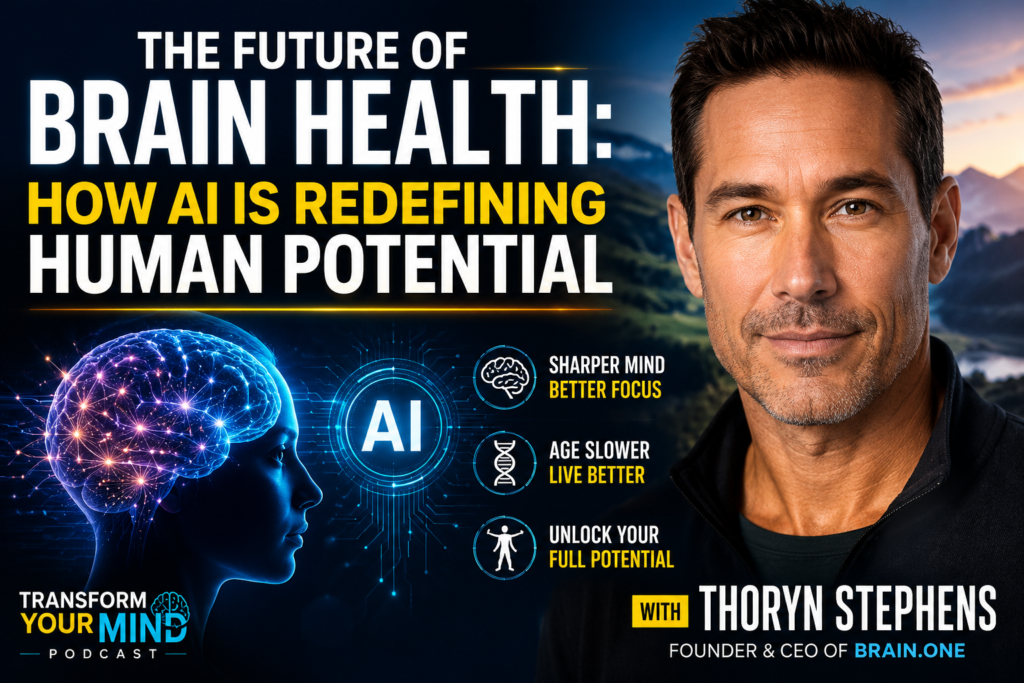
Today, the conversation around AI and brain health has focused on one thing: living longer. We count birthdays, celebrate longevity, and search for the newest anti-aging breakthroughs that promise more years of life. But a new question is emerging in the world of wellness and neuroscience:
For generations, the conversation around brain health and longevity has focused on one thing: living longer. Today, AI is adding an entirely new dimension to that conversation.
What’s the point of living longer if your mind cannot fully enjoy those years?
This is where the concept of mindspan changes everything.
While lifespan measures the number of years you live, mindspan measures the quality of your cognitive health-your memory, focus, emotional resilience, creativity, and mental clarity throughout life. And as artificial intelligence transforms healthcare and neuroscience, the future of brain health may become the most important wellness conversation of our generation.
What Is AI and Brain Health?
At its core, brain health refers to the ability of your brain to function optimally across emotional, cognitive, psychological, and neurological dimensions. A healthy brain supports:
AI and brain health come together when artificial intelligence is used to analyze patterns in cognitive, behavioral, and biological data. These technologies may help researchers better understand brain function, identify potential changes earlier, and develop more personalized approaches to supporting cognitive health.
- Clear thinking
- Emotional stability
- Focus and concentration
- Memory retention
- Decision-making
- Learning and adaptability
Chronic stress, poor sleep, processed foods, information overload, social media addiction, and burnout are contributing to rising levels of brain fog, anxiety, depression, and cognitive decline. More people are feeling mentally exhausted long before old age arrives.
The Shift From Lifespan to Mindspan
For years, health experts focused on preventing heart disease, diabetes, and physical illness. Today, scientists are realizing that preserving cognitive function may be just as critical as preserving physical health.
How long can you maintain a vibrant, clear, emotionally balanced, high-functioning mind?
This shift matters because the brain controls everything:
- Your relationships
- Your emotions
- Your productivity
- Your purpose
- Your quality of life
A longer life without mental clarity can become a painful experience rather than a meaningful one. That’s why the future of longevity is no longer just about anti-aging. It’s about optimizing brain health from the inside out.
How AI Is Revolutionizing Brain Health
Artificial intelligence is changing nearly every industry, but one of its most promising frontiers is brain health and cognitive performance.
AI can analyze massive amounts of behavioral and biological data faster than any human. This allows researchers and health innovators to identify patterns associated with cognitive decline, mental fatigue, stress responses, and neurological changes—sometimes before those changes would otherwise be obvious.
Imagine a future where your wearable device can detect subtle changes in:
- Sleep quality
- Stress levels
- Focus patterns
- Emotional regulation
- Cognitive performance
And then provide personalized recommendations in real time to improve your brain function.
That future is already beginning.
AI-powered health platforms are now helping people:
- Improve focus and concentration
- Optimize sleep cycles
- Reduce mental fatigue
- Create healthier behavioral habits
- Track cognitive performance over time
Instead of reactive healthcare that treats disease after it appears, AI is pushing society toward preventative brain health optimization.
Brain Fog: The Silent Epidemic
People describe it as:
- Difficulty concentrating
- Mental exhaustion
- Forgetfulness
- Lack of motivation
- Reduced mental sharpness
Poor nutrition, chronic inflammation, hormone imbalances, trauma, and overstimulation can all contribute to cognitive decline. AI and neuroscience are now helping researchers better understand these patterns and personalize solutions for recovery.
The Everyday Habits That Protect Brain Health
Science continues to confirm that brain performance improves through consistent lifestyle practices such as:
Quality Sleep
Sleep is when the brain detoxifies, repairs neural pathways, and consolidates memory. Chronic sleep deprivation accelerates cognitive decline.
Movement and Exercise
Nutrition
Stress Reduction
Deep Human Connection
Continuous Learning
Women and Brain Health
An important conversation emerging in neuroscience is the connection between women’s health and brain health.
For decades, women’s cognitive and hormonal health were under-researched. Today, scientists are discovering important links between hormones, menopause, memory, mood, and dementia risk.
As AI becomes more integrated into healthcare, an important question emerges:
The answer may lie in balance.
Technology can provide data, insights, and predictive tools. But true brain health also involves emotional intelligence, spirituality, self-awareness, purpose, and connection.
The future will belong to those who learn to combine innovation with inner awareness.
The Future of Brain Health
In the coming years, we may see:
- Personalized AI brain coaches
- Predictive cognitive health tracking
- Early dementia detection
- Brain optimization programs
- Mental performance analytics
- AI-guided behavior change systems
But even with all these advancements, the foundation of brain health will still come down to how we live each day.
- How we sleep.
- How we think.
- How we manage stress.
- How we nourish our bodies.
- How we protect our peace.
The Future of Mindspan: Enhancing Cognitive Longevity
In recent years, a paradigm shift from merely focusing on lifespan to understanding the crucial concept of mindspan has emerged. This shift focuses not just on living longer but on improving the quality of life by enhancing brain performance.
As Myrna Young highlighted, “What if living longer didn’t mean living better?… we’re fighting for our mindspan.” Maintaining cognitive sharpness and the ability to experience joy and fulfillment throughout life’s later stages are becoming pivotal in health discourse. Recognizing and acting upon these facets could potentially ward off cognitive decline and diseases such as dementia.
AI and neuroscience pioneer, Thorin Stevens, corroborates that understanding one’s current neurological health through technologies like brain mapping can lay the foundation for developing strategies to maintain mental agility.
Scientifically backed interventions, as mentioned by Thoryn, involve understanding both the technical (EEG and MRI) and biological aspects (biomarkers, omega-3 levels) of brain health. This data-driven insight emphasizes a proactive approach, where regular assessments can guide personalized strategies protecting against cognitive decline.
Elevating Brain Performance with Esential Microhabits
This podcast delves into microhabits that have the potential to significantly enhance brain performance. Simple lifestyle adjustments, scientifically backed, offer substantial cognitive benefits. Myrna’s insight on sleep and the direct impact of sunshine on circadian rhythms underlines the simplicity yet profound impact of integrating these habits into daily life. “Sleep is the foundation of everything,” remarks Thoryn, further pointing out the beneficial effects of morning sunlight on both brain function and mood.
Moreover, the underestimated power of community and connection serves as another crucial element of maintaining an optimal brain environment. Engaging in group activities like line dancing not only combines physical stimulation with social interaction but creates an environment where neuroplasticity can flourish.
Thoryn states, “It’s combining physical activity with community that’s paramount,” signaling the solid foundation these core habits provide in enhancing cognitive longevity. Beyond these, embracing the mindset of constant learning and challenge, such as picking up a new language or skill, enhances the brain’s adaptability and longevity.
Harnessing AI and Neuroscience for Brain Health Evolution
The future of AI and neuroscience offers groundbreaking possibilities in revolutionizing brain health. Through adaptive AI models, personalized health protocols can be constantly optimized based on individual data inputs.
As Thoryn indicates, current developments involve merging biological data (such as genomics and epigenetics) with technological interfaces that can offer real-time health insights.
In particular, advancements like Brain-Computer Interfaces highlight cutting-edge science by fostering direct interactions between the cognitive and digital realms.
Thoryn recounts the story of Dr. Galen Buckwalter, an individual aided by neural implants allowing him to control prosthetic devices through brain signals. Although primarily exploratory, these advances uncover possibilities in Ai and neuroscience for aiding those with serious neurological impairments, potentially leading to breakthroughs for people with spinal cord injuries or TBI. “We’re really the generation standing at the intersection of biology and machine,” Thorin emphasizes, showcasing the potential for AI-driven interventions to drastically alter personal healthcare landscapes.
We exist at a fascinating crossroads of health and technology, where traditional wellness meets transformative digital advancements. This discourse with Thoryn and Myrna ushers in an era where Ai and neuroscience are empowered with actionable insights into achieving an optimal mindspan while improving their overall healthspan.
Techniques leveraged from AI, supported by neuroscience, assist in crafting customizable health pathways that account for our individuality and embodiment. The ultimate mission is clear: to not only extend years to life but also life to years by ensuring cognitive vitality throughout one’s lifetime.
What Is the Future of AI and Brain Health?
The future of AI and brain health may be less about simply extending lifespan and more about protecting mindspan—the years we remain mentally clear, emotionally resilient, creative, and cognitively engaged.
As AI tools become more sophisticated, researchers may be able to recognize patterns in sleep, stress, cognition, behavior, and other health data earlier and personalize interventions more effectively. But technology is only one part of brain health. Sleep, movement, nutrition, meaningful relationships, stress management, and lifelong learning remain important foundations for maintaining cognitive well-being.
The real promise of AI may not be helping us live forever. It may be helping us remain fully present for more of the years we have.
The future of longevity and human optimization is no longer just about adding years to life. It’s about adding clarity, purpose, focus, and vitality to those years.
Mindspan may become one of the defining health priorities of the modern age.
Because in the end, the greatest luxury is not simply living longer. It’s about neuroperformance.
It is having the mental clarity to fully experience the life you’ve been given.
And that is why the future of brain health matters more than ever.
Frequently Asked Questions About AI and Brain Health
What is AI and brain health?
AI and brain health refers to the use of artificial intelligence to analyze cognitive, behavioral, and biological data to better understand brain function. Researchers are exploring how AI can help identify patterns associated with cognitive performance, stress, sleep, mental health, and neurological changes.
What is the difference between lifespan and mindspan?
Lifespan is the number of years a person lives, while mindspan describes the years a person maintains cognitive health, mental clarity, emotional resilience, memory, and the ability to engage meaningfully with life. The goal is not simply to live longer, but to maintain a healthy mind throughout those additional years.
How is AI being used to improve brain health?
AI can analyze large amounts of health and behavioral data to identify patterns that may be difficult for humans to detect. Researchers are studying its use in areas such as cognitive assessment, neurological research, personalized health recommendations, sleep analysis, stress monitoring, and early detection of changes in brain function.
Can AI help prevent cognitive decline?
AI cannot guarantee that cognitive decline will be prevented. However, researchers are investigating how AI may help identify risk patterns and changes in cognitive function earlier, potentially allowing individuals and healthcare professionals to respond sooner. Healthy sleep, physical activity, nutrition, social connection, stress management, and lifelong learning remain important foundations of brain health.
Link to Transcript
Sponsors of this Podcast
- With Wegovy at Hers, lose up to 20% or more of your body weight when combined with diet and exercise. Ready to reach your goals? Visit forhers.com/transform to get personalized, affordable care that gets you.
Additional Resources
- Instagram: BrainBrainFitnessOne
- Instagram (Thoryn Stephens): RageArea
- Mentioned Authors: Dr. Galen Buckwalter, Peter Attia