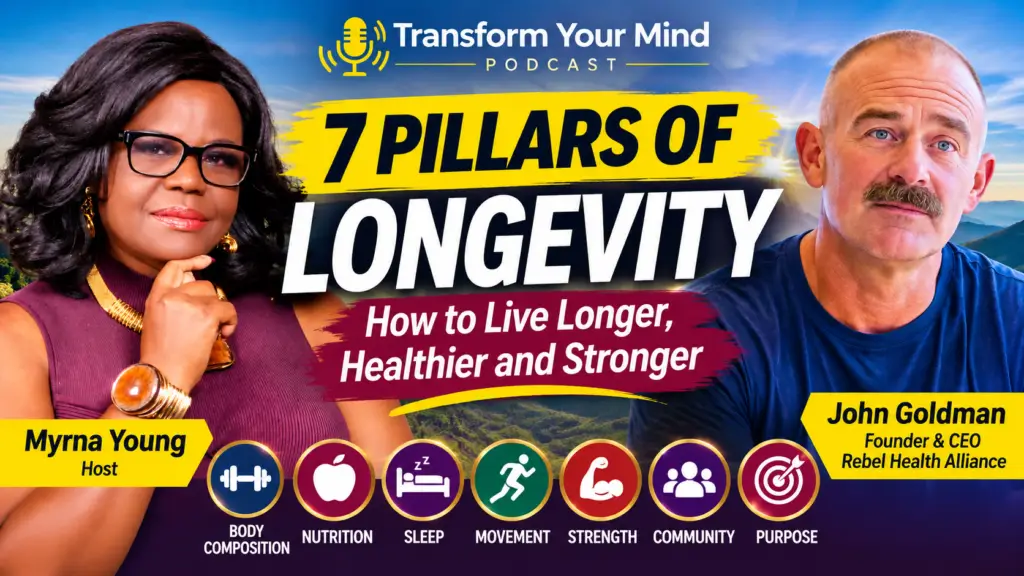
The core pillars of longevity focus on extending your health span—the years you spend strong, independent, and free of chronic disease—rather than just adding years to your life
What if your doctor told you that you were perfectly healthy, but every morning you woke up exhausted, struggled with brain fog, and felt like your body was aging faster than it should?
Would you accept that feeling tired, overweight, and mentally sluggish was simply part of getting older? Or would you challenge the healthcare system and demand a better answer?
That is exactly what happened to John Goldman, founder and CEO of Rebel Health Alliance. At approximately 45 years old, John was exercising, going to the gym, and doing what he believed were all the right things. His annual medical checkups weren’t raising major alarms, yet he felt terrible.
He wasn’t sleeping properly. His energy was disappearing. His mental clarity was suffering. And he began asking himself a frightening question: If I feel this bad in my mid-40s, what will the next 30 years look like?
Instead of accepting his symptoms as inevitable, John decided to investigate what was happening inside his body.
What he discovered changed his health, inspired him to launch a company, and eventually motivated him to attempt something most recreational runners would consider unreasonable: qualifying for the Boston Marathon.
During our conversation on the *Transform Your Mind* podcast, John and I explored **preventive healthcare, longevity, metabolic health, visceral fat, GLP-1 medications, and the mindset required to take control of your health.**
But one of the most powerful discoveries from our conversation had nothing to do with blood tests, medications, or expensive medical technology.
It was the realization that living longer requires more than maintaining a healthy body. We also need meaningful relationships, a sense of purpose, and something worth getting out of bed for every morning.
Let’s explore how you can begin taking a more proactive approach to your health and why the seven pillars of longevity may be more important than the latest anti-aging supplement.
Why Traditional Healthcare Often Focuses on Disease Instead of Optimal Health
Most of us grew up believing that an annual physical examination was enough to tell us whether we were healthy.
We visit our primary care physician, have routine blood tests, check our blood pressure, and perhaps discuss our cholesterol and blood sugar.
If everything falls within the expected range, we leave the appointment feeling reassured.
But what happens when our test results appear acceptable while our bodies are telling us something different?
John Goldman experienced this disconnect firsthand.
During our interview, he explained that his physician would occasionally notice a concerning number but recommend monitoring it rather than taking immediate action.
Meanwhile, John continued feeling progressively worse.
At approximately 45 or 46, he was experiencing persistent fatigue, poor sleep, reduced mental clarity, and a general sense that something was wrong.
He had always considered himself athletic, which made his declining health particularly frustrating.
His turning point came when he contacted a friend familiar with biohacking and advanced health testing.
That conversation introduced him to a different approach to healthcare.
7 Pillars of Longevity: How to Live Longer and Healthier
Pillars of Longevity: What Is Healthcare 3.0?
Healthcare 3.0 is a concept popularized by longevity physician Dr. Peter Attia. It describes a more proactive approach to medicine that emphasizes prevention, early risk assessment, and maintaining physical and cognitive function.
Rather than waiting until a disease develops, this approach asks whether we can identify meaningful risks earlier and intervene appropriately.
The distinction is important.
Traditional healthcare already includes preventive services such as cancer screening, vaccinations, blood pressure management, and diabetes prevention. However, appointments are often brief, and patients may not receive enough individualized support for long-term lifestyle changes.
John believes healthcare should go beyond managing disease to helping people improve their everyday functioning.
He wants patients to ask questions such as:
– Why am I constantly tired?
– Why am I gaining abdominal fat despite exercising?
– Is my sleep affecting my metabolic health?
– What can I do to preserve muscle and mobility as I age?
– How can I reduce my risk of chronic disease?
– What changes would help me feel healthier over the next 20 years?
The goal isn’t simply to avoid illness.
It’s to improve health span—the number of years we spend living with good health, independence, and the ability to enjoy life.

How Advanced Health Testing Changed John’s Pillars of Longevity
When John began investigating his symptoms, he underwent a more comprehensive health assessment.
His testing included some of the pillars of longevity, blood biomarkers, body composition measurements, and evaluations of his metabolic health and cardiovascular health.
Some of the findings surprised him.
According to John, his results revealed elevated inflammatory markers, high cholesterol, insulin resistance, excess visceral fat, abnormal liver markers, and evidence of fatty liver disease.
He also discovered that sleep apnea was interfering with his sleep.
Suddenly, many of his symptoms made more sense.
He wasn’t simply getting older. He had identifiable health problems that deserved attention.
Understanding the 7 Pillars of Longevity Biomarkers
Several measurements came up during our conversation.
**C-reactive protein (CRP):** A blood marker associated with inflammation. Elevated CRP can have several causes, so it must be interpreted in context rather than treated as a diagnosis by itself.
**Hemoglobin A1C:** A measurement that reflects average blood glucose over approximately three months. It can help identify prediabetes and diabetes.
**ApoB:** A blood test that measures the number of certain cholesterol-carrying particles associated with cardiovascular risk.
**Lipoprotein(a), or Lp(a):** A largely inherited cardiovascular risk factor that may provide additional information beyond a standard cholesterol panel.
**DEXA scan:** A technology that can measure body composition, including estimates of fat and lean tissue.
**VO2 max:** A measure of cardiorespiratory fitness that reflects the body’s ability to use oxygen during intense exercise.
Not everyone needs every one of these tests. Their usefulness depends on personal risk factors, medical history, symptoms, and whether the results would change treatment.
What matters is identifying the information that can lead to meaningful action.
Why More Health Data Doesn’t Always Mean Better Health
This part of our conversation really resonated with me because I had a similar experience.
I previously underwent extensive health testing through a diagnostic company. I had numerous blood samples collected and completed a DEXA scan to understand my body composition.
For approximately two years, I had access to all kinds of health information.
But there was a problem.
I had the data without a clear plan for what to do with it.
I remember looking at the results and thinking that while the technology was impressive, I wasn’t necessarily healthier because of it.
John explained that this has become increasingly common.
Today, people can purchase sophisticated blood tests, wear fitness trackers, monitor their glucose, and analyze their sleep.
They may have an Oura Ring, a Garmin watch, or another device collecting information around the clock.
Some even upload their results to artificial intelligence tools, hoping to discover what their numbers mean.
But information alone doesn’t create transformation.
We need someone who can interpret the findings, distinguish important risks from less meaningful fluctuations, and help develop an appropriate plan.
As John explained, people can unintentionally create a second job for themselves by collecting so much health data.
The lesson is simple: **Don’t just measure your health. Use appropriate measurements to guide meaningful improvements.**
How John Goldman Reversed His Metabolic Health Problems
After receiving his results, John assembled a team that included a physician, strength coach, and dietitian.
Together, they created a personalized program focused on improving his metabolic health pillars of longevity.
The plan addressed nutrition, exercise, body composition, and sleep.
John reported that within approximately six months, many of his concerning biomarkers had improved substantially.
His inflammation markers decreased. His blood sugar and insulin-related measurements improved. His visceral fat declined, and he began sleeping through the night after receiving treatment for sleep apnea.
He described feeling like a completely different person.
This experience eventually inspired him to create Rebel Health Alliance.
His reasoning was straightforward.
He had access to knowledgeable professionals and the time to investigate his health. But what about people who didn’t have those resources?
What about the busy parent, executive, entrepreneur, or caregiver who wanted to improve their health but didn’t know where to begin?
John wanted to make personalized, proactive healthcare more accessible to those individuals.
His company focuses on metabolic health, preventive care, and coordinated support from medical and fitness professionals.
The larger lesson from his story is that identifying a health problem is only the beginning.
Sustainable improvement usually requires consistent habits, professional guidance when needed, and a willingness to take responsibility for the choices we can control.
What Is Visceral Fat and Why Does It Matter for Longevity?
One of the most interesting parts of our interview involved visceral fat.
John revealed that his earlier testing had identified approximately five pounds of visceral fat around his abdominal organs.
That immediately caught my attention.
Many people worry about belly fat because of how it affects their appearance.
But visceral fat is particularly important because it is associated with metabolic and cardiovascular health risks.
The Difference Between Visceral Fat and Subcutaneous Fat
Subcutaneous fat sits directly beneath the skin.
Visceral fat is stored deeper inside the abdomen, surrounding internal organs.
Excess visceral fat is associated with increased risks of insulin resistance, type 2 diabetes, fatty liver disease, and cardiovascular problems.
Someone can have a relatively normal body weight and still carry excess visceral fat.
This is one reason body composition and waist measurements can sometimes provide useful information beyond the number on a bathroom scale.
How Can You Reduce Visceral Fat?
I asked John a question I knew many listeners would appreciate.
How did he get rid of his visceral fat?
His answer emphasized a comprehensive approach rather than one miracle solution.
He focused on nutrition, aerobic exercise, resistance training, and improving metabolic health.
A sustainable calorie deficit can help reduce excess body fat. Regular physical activity improves cardiovascular fitness and insulin sensitivity, while strength training helps preserve muscle during weight loss.
John also emphasized combining lower-intensity aerobic activity with more demanding workouts when appropriate.
However, intense exercise isn’t necessary for everyone, particularly beginners or people with certain medical conditions.
Walking, cycling, swimming, and other moderate activities can provide substantial health benefits.
The most important approach is one that is safe, consistent, and sustainable.
GLP-1 Medications, Weight Loss, and the Importance of Preserving Muscle
Our discussion naturally moved into GLP-1 medications, including semaglutide and tirzepatide.
These medications have become an important part of obesity and diabetes treatment.
John believes they can be powerful tools when prescribed appropriately, but he also emphasized the importance of medical supervision and supporting lifestyle habits.
I shared my own experience taking Mounjaro, which contains tirzepatide.
I had noticed changes in my resting heart rate and heart rate variability while taking the medication. Those observations prompted me to reduce my dosage, although I subsequently experienced some weight regain.
John discussed his own experiences with weight-loss medication and how it affected the metrics he monitored during endurance training.
Why Muscle Loss Matters During Weight Loss
When people lose a substantial amount of weight, they typically lose a combination of fat and lean tissue.
This is not unique to GLP-1 medications.
However, preserving muscle becomes especially important during significant weight loss because muscle supports strength, mobility, glucose regulation, and physical independence.
John emphasized two essential strategies:
– Consume sufficient protein based on individual nutritional needs.
– Incorporate regular resistance training to help preserve muscle mass.
For people taking weight-loss medications, these habits can support healthier body composition.
Medication decisions, dosage changes, and side effects should always be discussed with a qualified prescribing clinician.
Is Resting Heart Rate and HRV a Pillar of Longevity?
Resting heart rate and heart rate variability, commonly called HRV, can provide useful information about cardiovascular and autonomic nervous system activity.
Some GLP-1-based medications can increase resting heart rate, although the degree varies between individuals.
HRV can also change for many reasons, including sleep, illness, exercise, stress, and medication effects.
A change in HRV does not automatically prove that someone is stuck in a fight-or-flight response.
During our conversation, John encouraged people to pay attention to their individual responses rather than assuming that everyone experiences medication in the same way.
That message is especially important.
Our bodies are not identical, and health decisions should consider both the benefits and risks of treatment.
Project Unreasonable: How John Goldman Is Testing His Own Limits
Once John improved his health, he faced an interesting question.
What could he accomplish now that he felt better?
He had already completed a marathon in approximately five hours.
For most people, finishing a marathon is an extraordinary achievement.
I certainly thought so!
I’ve completed a 10K, and I know how challenging it can be to keep moving when your body wants to stop.
But John wanted to push himself further.
He decided to pursue qualification for the Boston Marathon.
He called the challenge **Project Unreasonable**.
The name reflects his belief that some goals may appear unrealistic without actually being impossible.
What Happens When You Go All In?
John gathered a team that included his physician, endurance coach, strength coach, physical therapist, and dietitian.
They developed a detailed training plan designed to improve his running performance while supporting recovery and overall health.
His program involved carefully structured running, resistance training, nutrition, and medical monitoring.
During our interview, he reported losing approximately 45 pounds while increasing his running mileage.
He also described the mental challenges of following such a demanding plan.
The excitement of starting a new goal eventually wears off.
The finish line still seems far away.
And suddenly, progress depends on getting up every morning and doing the work whether you feel motivated or not.
John called this period the doldrums.
I think most of us can relate to that feeling.
Whether we’re trying to lose weight, write a book, launch a business, or improve our relationships, there comes a point when enthusiasm disappears and discipline must take over.
Why Small Daily Improvements Create Big Transformations
John explained that meaningful progress can be almost invisible from one day to the next.
You may follow your plan for a week and feel as though nothing has changed.
But small improvements can accumulate over months.
This is where mindset becomes essential.
You have to trust the process long enough to see the results.
You also need a meaningful reason to continue.
And that brings us to one of my favorite parts of our conversation.
The Power of Knowing Your Why
When John described his training program, I noticed that he had discussed almost everything except mindset.
So I asked him about it.
What kept him motivated when the daily work became difficult?
He explained that remembering his goal was essential.
But I wanted to go deeper.
I asked him, “What’s your why?”
His answer revealed something much more meaningful than qualifying for a race.
He wanted to be healthy for himself, his family, his community, and the people who depended on him.
He wanted to model healthy behavior for his children.
He wanted to remain an active husband and father.
And he wanted to live long enough to enjoy future milestones with his family.
John also wanted his professional work to contribute to improving healthcare.
Suddenly, Project Unreasonable wasn’t simply about running faster.
It was about becoming the kind of person he wanted to be and living in alignment with his values.
Why Purpose Is Stronger Than Temporary Motivation
Many people begin a health journey with surface-level goals.
They want to lose 20 pounds.
They want to fit into their favorite clothes.
They want to look better for an upcoming vacation.
There’s nothing wrong with those goals.
But what happens when the scale stops moving or the excitement fades?
A deeper purpose can help sustain commitment.
Perhaps you want to remain mobile enough to travel in retirement.
Maybe you want to play with your grandchildren.
Perhaps you want to avoid preventable health complications that affected someone you love.
Or maybe you simply want the energy to pursue the dreams you’ve postponed.
When your health goals connect to something emotionally meaningful, healthy behaviors become more than items on a checklist.
They become part of how you choose to live.
The Seven Pillars of Longevity According to John Goldman
Toward the end of our conversation, I asked John to explain the seven pillars of longevity that guide his approach at Rebel Health Alliance.
His framework combines physical health habits with two often-overlooked aspects of well-being: community and purpose.
1. Maintain a Healthy Body Composition
John’s first pillar is getting and staying lean.
His emphasis is on reducing excess body fat, particularly visceral fat, while maintaining muscle.
Healthy body composition is not about pursuing the lowest possible weight or body fat percentage.
Appropriate targets vary depending on age, sex, medical history, and individual circumstances.
The goal should be better metabolic health, strength, and physical function rather than appearance alone.
2. Eat Nutritious, Balanced Foods
The second pillar is nutrition.
John encourages people to prioritize whole foods and reduce their reliance on highly processed foods.
During our interview, he mentioned foods such as fish, lean proteins, vegetables, complex carbohydrates, nuts, avocados, and olive oil.
He also acknowledged that he enjoys pizza and other treats occasionally.
I appreciated that.
Healthy eating doesn’t have to mean never enjoying your favorite foods again.
A balanced approach that you can maintain is more valuable than a restrictive plan that lasts only a few weeks.
3. Prioritize Restorative Sleep
Sleep is the third pillar.
John shared that treating his sleep apnea dramatically improved his quality of life.
Before receiving treatment, he struggled with disrupted sleep and poor energy.
After being diagnosed, he began using a CPAP machine and noticed substantial improvement.
Sleep supports memory, emotional regulation, metabolic health, and physical recovery.
Most adults need approximately seven to nine hours of sleep per night, although individual needs vary.
If you snore loudly, wake up gasping, or feel persistently exhausted despite adequate time in bed, speak with a healthcare professional about whether a sleep evaluation is appropriate.
4. Pillar of Longevity: Move Your Body Regularly
The fourth pillar is movement.
John emphasized the importance of cardiovascular exercise and improving cardiorespiratory fitness.
He discussed walking, aerobic training, and higher-intensity exercise.
However, you don’t have to become a marathon runner to improve your health.
Regular walking can be a wonderful starting point.
For many adults, a useful general target is at least 150 minutes of moderate-intensity aerobic activity each week, adjusted to individual abilities and medical needs.
The key is to keep moving.
5. Build and Maintain Muscle Strength
The fifth pillar is resistance training.
John was particularly passionate about this topic.
As we age, we can gradually lose muscle mass and strength, a process that may contribute to reduced mobility and independence.
Resistance training can help counter these changes.
You can begin with resistance bands, bodyweight exercises, or appropriately selected weights.
Even two strength-training sessions per week can be beneficial.
The goal is not necessarily to build large muscles.
It’s to maintain the strength needed to carry groceries, climb stairs, get out of a chair, and remain active throughout life.
6. Build Meaningful Relationships and Community
This was one of the pillars that stood out most to me.
John believes community is essential to longevity.
We need people who care about us and people we care about.
We need opportunities to connect, contribute, and feel that we belong.
Those connections might come through family, friendships, faith communities, volunteer organizations, or shared interests.
Social isolation and loneliness are associated with poorer health outcomes, making meaningful relationships an important part of overall well-being.
John shared that he volunteers as a youth sports coach.
Helping young people and supporting families gives him a sense of connection and fulfillment.
I loved that example because it demonstrates that community isn’t only about what we receive.
It’s also about what we contribute.
7. Have a Sense of Meaning and Purpose
The final pillar is purpose.
And I believe this is one of the most important.
John explained that people need a reason to get up in the morning.
For some, that purpose comes from faith.
For others, it comes from family, creativity, service, or a meaningful mission.
Purpose gives our daily actions direction.
It can also help us remain committed to healthy behaviors when life becomes challenging.
During our conversation, John referenced Viktor Frankl, the psychiatrist and Holocaust survivor who wrote about finding meaning even in circumstances of profound suffering.
His work reminds us that meaning can influence how we respond to adversity.
While purpose cannot guarantee good health or prevent illness, it can be a powerful source of motivation, resilience, and emotional well-being.
Why Community and Purpose May Be the Most Overlooked Pillars of Longevity Habits
After John explained his seven pillars, I asked which ones people tend to neglect.
His answer was community and purpose.
That didn’t surprise me.
We live in a world where people spend enormous amounts of money on supplements, health trackers, gym memberships, and anti-aging products.
Yet some people remain deeply lonely.
Others have achieved professional success but feel disconnected from anything meaningful.
We can become so focused on extending our lives that we forget to ask what makes those lives worth living.
This is why I believe mental health and physical longevity must be part of the same conversation.
Our thoughts influence our behavior.
Our relationships influence our emotional well-being.
And our sense of purpose can influence the decisions we make every day.
When we feel connected to something larger than ourselves, we may find greater motivation to care for our bodies and minds.
Healthy aging isn’t only about having strong muscles and good blood pressure.
It’s also about having people to laugh with, goals to pursue, and experiences that make life meaningful.

Is VO2 Max Testing Necessary After 60?
Near the end of our interview, Myrna asked John a question that had been on her mind for some time.
I’ve heard Dr. Peter Attia discuss VO2 max and the importance of cardiovascular fitness.
But as someone in my 60s, I wasn’t particularly excited about the idea of sprinting at maximum effort just to improve a number.
I told John that I thought I might be too old for that kind of training.
He challenged my thinking.
He reminded me that people in their 60s and beyond can achieve impressive levels of fitness when they train appropriately.
But he also made an important distinction.
You don’t necessarily need a formal VO2 max test to begin improving your cardiovascular health.
Start With What You Can Do Today
For someone who is older, sedentary, or returning to exercise, John emphasized beginning with consistent movement.
Walking regularly, gradually improving endurance, and increasing activity at an appropriate pace can provide meaningful benefits.
VO2 max testing may be useful for measuring progress, but it isn’t a prerequisite for getting healthier.
That was an important reminder for me.
Sometimes we become intimidated by advanced fitness terminology and forget that improvement begins with simple actions.
You don’t need to become a competitive athlete.
You need to begin where you are and build from there.
If you have cardiovascular symptoms, significant medical conditions, or have been inactive for a long time, discuss vigorous exercise with your healthcare professional before attempting demanding workouts.
How to Become the CEO of Your Own Health
One of the central themes of my conversation with John was personal agency.
He believes we must become active participants in our healthcare rather than passive recipients of medical advice.
I agree.
But taking responsibility for your health doesn’t mean blaming yourself when you become sick.
Genetics, environmental exposures, access to healthcare, financial circumstances, and many other factors influence health outcomes.
Personal responsibility means recognizing where you have influence and using that influence wisely.
You can begin by asking better questions during medical appointments.
You can learn what your important health measurements mean.
You can prioritize sleep, movement, nutrition, and meaningful relationships.
You can seek professional guidance when symptoms persist.
And you can establish realistic goals that support your long-term well-being.
Most importantly, you can stop assuming that feeling worse every year is an unavoidable part of aging.
Some changes are associated with getting older, but many aspects of physical function and quality of life can improve through appropriate treatment and healthy habits.
Final Thoughts: It’s Never Too Late to Take Control of Your Pillars of Longevity
As we wrapped up our conversation, John shared a message that I hope everyone remembers.
He reminded us that although it would have been wonderful to begin improving our health 20 years ago, the next best opportunity is today.
I think that’s a beautiful way to approach longevity.
You cannot go back and change every decision you’ve made about your health.
You cannot undo years of poor sleep, inactivity, or unhealthy habits overnight.
But you can make a different choice today.
You can go for a walk.
You can schedule the medical appointment you’ve been postponing.
You can begin strength training.
You can reconnect with an old friend.
You can identify a meaningful goal that gives you a reason to keep moving forward.
And you can begin treating your health as something worth investing in.
For me, the biggest takeaway from this interview is that **the pillars of longevity begins in the mind and lives in the body. **
We must first believe that a healthier future is possible before we can commit to the daily actions that support it.
John Goldman’s journey from feeling exhausted and metabolically unhealthy to pursuing an ambitious marathon goal reminds us that meaningful transformation can begin at any stage of life.
You don’t have to qualify for the Boston Marathon.
You simply have to decide that your health, your happiness, and your future are worth the effort.
Because the goal isn’t just to live longer.
**The goal is to live better, with the energy, strength, purpose, and relationships that make those extra years meaningful.**
About John Goldman and Rebel Health Alliance
John Goldman is the founder and CEO of Rebel Health Alliance, a healthcare company focused on proactive medical care, metabolic health, and personalized health optimization.
After experiencing his own health transformation, John created Rebel Health Alliance to help individuals better understand their health and develop coordinated strategies for improving their well-being.
He is also pursuing an ambitious personal fitness challenge through Project Unreasonable, documenting his efforts to qualify for the Boston Marathon.
To learn more about John and his work, visit [Rebel Health Alliance](https://rebelhealthalliance.io/).
You can also connect with John on Instagram at **@johngoldman__** or on X at **@johngoldman**.
Listen to More Transform Your Mind Podcast Episodes
If you enjoyed this conversation about preventive healthcare, metabolic health, and the seven pillars of longevity, explore more episodes of the *Transform Your Mind* podcast.
Hosted by Myrna Young, *Transform Your Mind* features conversations with physicians, researchers, wellness experts, and transformational leaders exploring the connection between mindset, mental health, trauma recovery, and physical vitality.
Our mission is to help you improve the way you think, feel, and live so you can create a healthier, more meaningful future.
**Are you a physician, researcher, wellness expert, author, or transformational leader with a message that can help our audience?**
We welcome qualified experts who can share practical insights and meaningful stories about health, longevity, mental wellness, and personal transformation.
Because when you transform your mind, you can transform your life.
*Medical disclaimer: This article is for educational purposes and reflects a podcast conversation. It is not a substitute for individualized medical advice, diagnosis, or treatment. Consult a qualified healthcare professional before making changes to medications, supplements, or exercise programs.*
Sponsored Ad
Is there something that runs in your family, like heart disease, breast cancer or Alzheimer’s? Most of us just wonder about it. Understanding your inherited risks can help you and your doctor make smarter decisions about your health.. A great place to Start is with Sequencing.com.
Right now, Sequencing.com is offering our listeners 10% off your full Genome test, plus free shipping. ● Go to Sequencing.com and use promo code TRANSFORM10 for 10% off.
Interested in being a guest on the Transform Your Mind Podcast
Apply Here
Transform Your Mind Guests | Transform Your Mind Podcast
Additional Resources