
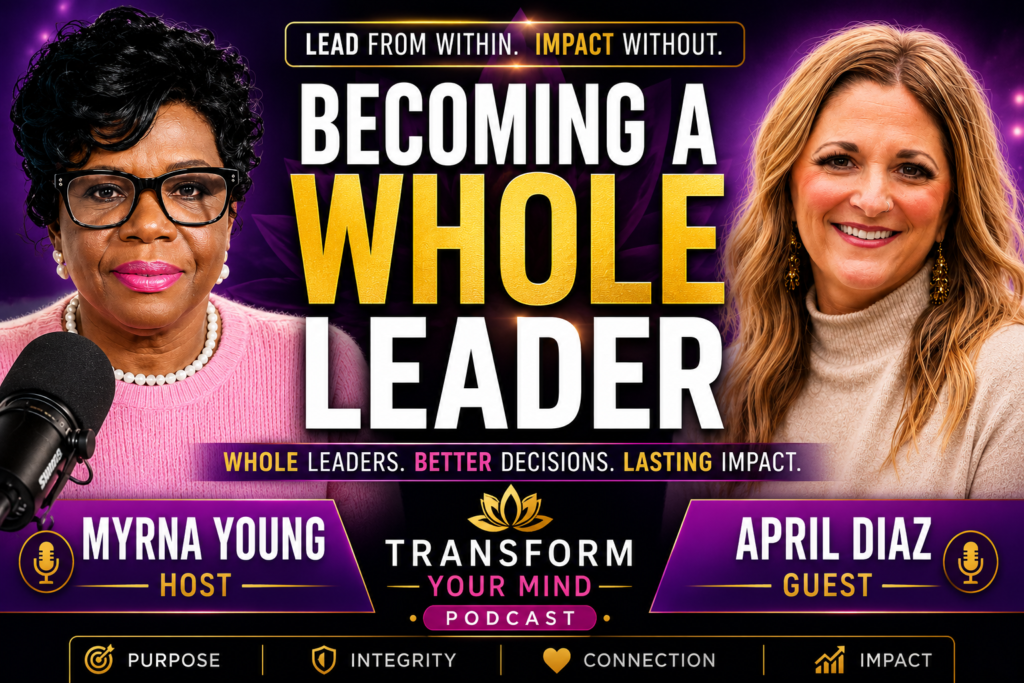
Join Myrna Young and guest April Diaz, founder and CEO of Azera & Co., as they explore the art of self-leadership. The journey to becoming a whole leader. Discover the challenges high-capacity women face in managing energy and avoiding burnout, while balancing professional success and personal well-being. April shares her insights into the six key components of holistic leadership: physical, emotional, mental, relational, spiritual, and renewal. Learn practical steps for aligning your inner life with external achievements, ensuring fulfillment and authenticity in your self-leadership journey. Tune in for empowering strategies in the art of self-leadership.
Key Takeaways
Holistic self-leadership is essential to balance high ambition with sustainable well-being.
True fulfillment in leadership stems from introspection and personal growth, not external achievement alone.
Self-awareness invites transformation; taking stock of one’s physical, emotional, and spiritual energy can reignite purpose and efficacy.
In today’s fast-paced world, women who lead often find themselves in the precarious balance of career ambition and personal wellness. On the latest episode of “Transform Your Mind to Transform Your Life,” hosted by Myrna Young, guest April Diaz, a seasoned leadership coach, shines a spotlight on whole leadership. This article explores key elements of their fascinating discussion, examining why managing one’s internal landscape is as crucial as external achievements, especially for high-capacity women.
The Exhaustion of Success: Why Wholeness Matters
Self-Leadership comes with its share of high expectations and responsibilities. Many women climb the professional ladder, checking all the boxes of success, yet they feel exhausted and overwhelmed. April’s insightful analogy of the “Popeye arm” illustrates this predicament vividly: “You have one arm that is all about the hustle and achievements…but this other arm, that’s all about your energy and your renewal…that arm is emaciated and you are racing towards burnout.”
The deeply ingrained cultural script that pushes women to place everyone else before themselves is not without consequences. Myrna underscores, “You can’t pour from an empty cup.” April, echoing a similar sentiment stresses, “We have to completely reorder how we do leadership.”
For some leaders, like April’s client Lacey, external forces like sudden job loss become the unanticipated wake-up call prompting deeper introspection. Lacey found herself relieved, even liberated, upon being fired, reflecting a profound misalignment internally despite her high performance externally. These unplanned disruptions often serve as pivotal moments, urging introspection and alignment of one’s professional path with personal values.
Expanding The Art of Self-Leadership for Outer Results
Central to April’s philosophy is the concept of the art of self-leadership, which she breaks down into six parts: physical, emotional, mental, relational, spiritual, and renewal. She advocates a balanced focus on these areas as the key to holistic leadership, with the notion that expanding one’s inner capacity naturally leads to better external results.
April describes the necessity for leaders to move beyond surface-level efforts: “When you expand your internal capacity, you naturally get better external results.” This involves taking a step back from the relentless pursuit of task lists and external validations, to reassessing and nurturing our inner worlds.
The “whole leader snapshot,” a tool April developed, enables individuals to define their own realities, uncover blind spots, and advance towards self-alignment. The pursuit of insight and self-awareness is crucial: “For the client who’s about to get fired and starts immediately looking for jobs, all they are looking at is the external,” April notes. This shift from external validation to internal alignment can refuel one’s drive with authenticity and balance.
The Deliberate Practice of Self-Awareness
Myrna and April discuss the importance of deliberate practice in fostering traits like patience and resilience—traits integral to leadership. April says, “There’s a very big difference between training and trying to…you can never out try what it is that you’ve already trained yourself to do.”
This involves intentionally placing oneself in situations where the desired attributes can be practiced and developed, expanding individual capacity over time. Myrna captures this brilliantly, comparing it to learning to swim before you’re drowning: we’ve got to do the work before impatience or burnout takes over.
Becoming a whole leader means consciously integrating introspection into daily practice, seeing challenges as opportunities for growth, and consistently aligning one’s professional life with personal well-being. The conversation touched on spirituality and energy management, urging leaders to honor their energy rhythms and explore self-renewal regularly.
Every day brings the challenge and promise of self-leadership. Transformative leadership pushes beyond just external accolades and successes. It is anchored in a deeper understanding and nurturing of one’s holistic self—physical, emotional, spiritual—to live and lead with vigor and purpose. As April aptly summarizes, “When you lead yourself holistically first, you can get unbelievable results.” Embrace these insights, for they carry the power to profoundly transform not only how you lead but also how you live.
Mastering the Art of Self-Leadership
Core Pillars of Self-Leadership
- Self-Understanding: Recognize your intrinsic worth independent of achievements, acknowledge your limitations, and confront the fears that hold you back.
- Intentional Direction: Define your personal “why” so you have a clear internal compass when facing complex or chaotic situations.
- Resilience and Growth: Bounce back from setbacks with grace, choosing progress over perfection and treating roadblocks as learning tools.
- Emotional Regulation: Build emotional intelligence by identifying your triggers and choosing calm, value-driven responses instead of reactive impulses.
Actionable Frameworks
- Stop Waiting: Actively advocate for yourself rather than waiting for a manager or circumstance to grant you a green light.
- Personal SWOT Analysis: Regularly list your strengths, weaknesses, opportunities, and threats to remain brutally honest with yourself about areas requiring growth.
- Curiosity Over Judgment: Approach personal mistakes or professional barriers by asking “what can I learn here?” instead of engaging in self-blame.
FAQ’s Self-Leadership
- What is the art of self-leadership?
The art of self-leadership is the ability to lead oneself by taking complete ownership of your work, motivation, and results rather than waiting for external direction.
- Why does self-leadership matter?
“When leaders learn to lead themselves first, they make clearer, faster, and more credible decisions.”
- What are core self-leadership skills?
- Self-awareness to recognize personal strengths and triggers.
- Self-regulation to manage impulses and emotional responses.
- Personal accountability for actions and outcomes.
- Intentional goal-setting and self-motivation.
- How can I develop self-leadership?
You can build these habits through regular self-reflection, mindfulness, clarifying your core values, and practicing deliberate decision-making.
- Who benefits from self-leadership training?
“Anyone who wants to increase influence and productivity while aligning with organizational goals will benefit.”
Download the Podcast Here:
Additional Resources
Link to Transcript
Azern Company Website: azernco.com
Whole Leader Snapshot: azernco.com/snapshot
April Diaz on Instagram: @aprilldiaz





2 Responses
You are the most important person you’ll ever lead. I love how much ground we covered in this episode!
Yes we covered a lot in this interview. Thanks