In the ever-evolving landscape of oncology and cancer treatments, the intersection of advanced medical research and patient-centered care creates an environment where transformative healing is more than a possibility. It is a dynamic journey.
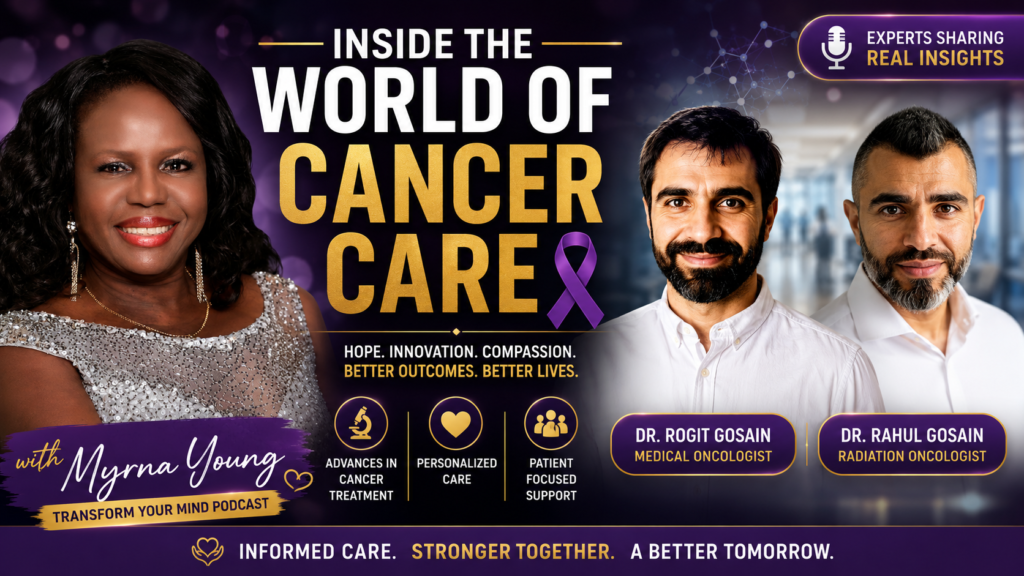
Today, the world of cancer care is witnessing groundbreaking advancements, and our understanding of these crucial developments is essential. Myrna Young engages Dr. Rohit Gosain and Dr. Rahul Gosain, the well-renowned Oncology Brothers, to unravel the complex webs of cancer treatment, patient advocacy, and the profound role of personalized medicine.
Key Takeaways
- The Oncology Brothers emphasize the explosion of cancer treatments and research and development, pointing out the annual approval of new treatments, which brings hope despite the challenges of keeping up with this data.
- Conferences serve as vital platforms for cancer education, yet the reality of financial and bias conflicts in the healthcare industry necessitates informed and independent patient advocacy.
- Cancer treatment personalization through genetic profiling and understanding patient-specific mutations are pivotal in tackling cancers more effectively and improving patient outcomes.
- Listeners are encouraged to seek knowledge on the available cancer treatments, understand screening guidelines, and engage in shared decision-making with healthcare providers for optimal cancer care.
- Despite disparities in healthcare access due to geographical and financial constraints, efforts are ongoing to make cutting-edge cancer treatments more widely available.
Understanding the Role of Oncology Conferences in Cancer Treatments
Oncology conferences play a pivotal role in the dissemination and discussion of cutting-edge cancer research. As Dr. Rahul eloquently puts it, “These conferences are where a lot of us… are coming together to learn from each other. This is where the science is presented.” These gatherings are not merely academic; they are crucibles where the future of cancer treatment is forged.
However, a common concern arises regarding the influence of pharmaceutical companies on conference presentations. While industry sponsorships are integral to conference logistics, Dr. Rohit asserts, “The conferences are mandated to keep the neutrality tight… the core aspect of the education is not anywhere close to touching any of the industry to influence their decision making process.” This neutrality ensures that the focus remains on genuine data and treatment efficacy, rather than marketing interests.
Yet, despite safeguards, the sheer volume of data-often numbering in the thousands of studies-poses another challenge. Rahul emphasizes, “The field is moving fast. That is really good… But now the challenge on our end as a medical oncologist is how do we keep up with all this?” Therein lies the balancing act: navigating a river of knowledge without drowning in misinformation or bias.
The Promise of Personalized Cancer Treatments
The dawn of personalized medicine marks a paradigm shift in how oncologists approach cancer care. The Oncology Brothers are at the forefront of advocating for treatments tailored to genetic profiles, moving away from the once one-size-fits-all approach. Rohit highlights the importance of this evolution, stating, “We are just not throwing chemotherapy at everyone. There are some targeted therapies that we can personalize…”
This mutation-driven treatment strategy is revolutionizing outcomes, especially in cases of metastatic cancers where prognosis used to be predominantly bleak. Quote from the transcript: “The drugs… are increasing the survival benefit, doubling that to close to about three years from 15 months.” This shift is not merely about extending life, but enhancing the quality of life for patients.
Through personalized medicine, the goal is to ensure that patients receive treatments specifically engineered to combat their unique cancer profiles, significantly enhancing the effectiveness of the medicine while potentially reducing unwarranted side effects.
Empowering Patients to Become Advocates
One of the most empowering messages imparted by the Oncology Brothers is the role of patients as informed advocates in their treatment journey. The idea is not only to treat cancer but to arm patients with the knowledge and confidence to lead their care.
Dr. Rahul advises, “Make sure you are in charge of your decisions. Make sure you’re informed. Make sure that that decision is right for you.” The responsibility for understanding one’s diagnosis, treatment options, and the implications of each choice rests not solely with physicians but also with patients. This discourse reflects a new era of partnership between patients and healthcare providers.
Rohit adds, “Please educate yourself… because that will impact your quality of life.” This encompasses understanding side effects, treatment modalities, and asking the indispensable questions: What are my treatment options? What benefits can I expect? What can my quality of life be?
Through such engagement, patients not only make informed decisions but also help foster a healthcare environment that prioritizes tailored, empathetic care.
Ultimately, the intersection of advanced oncology research, personalized treatment methods, and patient empowerment forms a triad of transformative potential in cancer care. These conversations by Dr. Rohit and Dr. Rahul Gosain, in conjunction with patient stories and medical data, remind us that the journey is collectively shared-by the patient in the driver’s seat, with adept physicians at their side.
By widening the path of education and dialogue, we transform more than individual lives; we collectively enhance our approach to one of the most arduous health challenges of our time.
Immerging Cancer Treatments: BRAF Inhibitors
And that too, particularly in metastatic or stage four bladder cancer space. Similar story worked out in colon cancer for BRAF inhibitors. I don’t want to use too much lingo here, but these are targeted therapies which are adding doubling off overall survival.
And this is in stage four setting where you call it death sentence, but here you’re talking about three, four, five, and six years down the line.
BRAF inhibitors are targeted oral therapies that block the mutated B-Raf proteins driving cancer growth. Primarily used for unresectable or metastatic melanomas, they are often paired with MEK inhibitors to improve efficacy and reduce side effects like skin toxicity.
BRAF is a gene that helps control cell growth through the MAPK/ERK pathway. When the gene mutates (such as the common V600E mutation), the pathway goes into overdrive, causing cancer cells to multiply unchecked. BRAF inhibitors block this abnormal protein to slow or shrink the tumor.
Approved Medications: Several BRAF inhibitors are approved for use:
- Dabrafenib (Tafinlar): Used for melanoma, non-small cell lung cancer, and thyroid cancer.
- Encorafenib (Braftovi): Approved for metastatic melanoma and colorectal cancer.
- Vemurafenib (Zelboraf): Used primarily for melanoma and Erdheim-Chester disease.
- Tovorafenib: A targeted therapy specifically for pediatric low-grade glioma.
Cancer Screenings
The common cancers that we’re running into breast cancer, colon cancer, lung cancer, prostate cancer, these are the common cancers that we run into again and again. Rohit had brought up the screening guidelines are there just for selected few. The hope with screenings is that we can we find the cancer sooner. Can we find it earlier before it’s stage four?
Sponsors for this Episode
Square
Square brings payments, POS, inventory, staffing, and online sales together in one system – so business owners don’t have to juggle a bunch of tools.
Right now, listeners can get up to $200 off Square hardware when you sign up at square.com/go/transform
Quince
Quince is not just apparel. It also offers elevated essentials for your home, including bedding, bath, kitchen essentials, and furniture.
Make your summer wardrobe feel easier. Go to Quince.com/tym for free shipping on your order and 365-day returns.
Frequently Asked Questions (FAQs)
1. What are the most common side effects of treatment?
2. How long do treatments last?
3. What dietary changes should I make?
4. Should I consider a clinical trial?
5. Can I miss or delay a treatment session?
Consistency is critical for successful cancer treatment. Delays or missed treatments increase the likelihood of cancer cells becoming resistant to the medication. If you must reschedule due to severe side effects or emergencies, notify your oncology team immediately.
Additional Resources
- OncBrothers Website
- OncBrothers Podcast on YouTube | Spotify | Apple Podcasts
- Social Media: @ONCBrothers on X/Twitter
- Can You Turn Off Cancer With Your Mind?
- PodCast Transcript