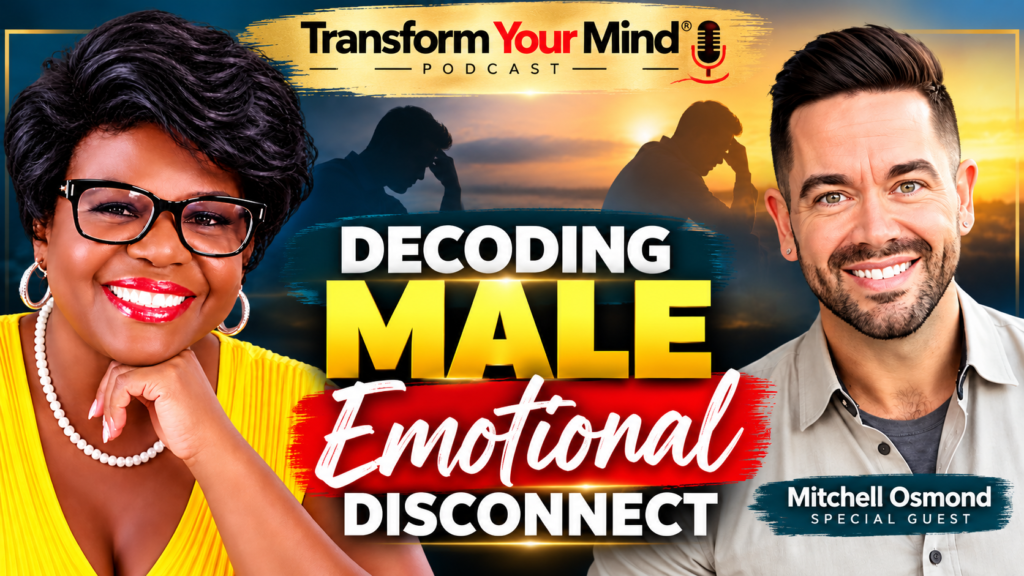
Myrna Young delves into why high achieving men struggle with emotional connection to their partners with Mitchell Osmond, leadership coach and Dad Nation podcast host. Osmond shares his transformation journey from personal trauma to emotional mastery and highlights three pillars for transformation: information, implementation, and accountability.
The discussion explores how men are wired differently, impacting communication within relationships. Osmond offers practical strategies for fostering emotional connection, emphasizing understanding core emotional needs. Tune in for insights aimed at helping high-performing men build stronger familial ties without sacrificing success.
Key Takeaways
- Understanding the innate wiring and gender-specific emotional connection needs can create stronger emotional connections between partners.
- Effective communication techniques, such as asking the right questions, can significantly improve relationship dynamics.
- Recognizing and addressing childhood programming can pave the way for healthier family interactions and personal growth.
In today’s fast-paced world, where personal identity often meshes with professional achievements, there’s a silent struggle that many successful men face. The challenge of being emotionally present in their personal lives. During the “Transform Your Mind“ podcast, Myrna Young and leadership coach Mitchell Osmond delve into the intricate dynamics between modern-day men and women, offering insights that could reshape and transform marital relationships.
Understanding Male Emotional Connection Wiring and Challenges
For men, discussing emotional connection is often likened to uncharted territory. As Mitchell Osmond insightfully shares, “Men universally struggle with their emotions and talking about them. It’s part nature and part nurture.” This isn’t due to a lack of love or desire to connect, but rather the result of both inherent wiring and societal conditioning.
The term “normative male alexithymia,” which Osmond refers to, underscores the natural inclination for men to be “without words for emotion.” Despite this, every relationship thrives on emotional connectivity, which can fall into jeopardy when men find it challenging to communicate their feelings.
Interestingly, a man’s need to feel respected and competent often outweighs the need for love. This preference explains why many men can feel accomplished at work yet remain disconnected at home. As Osmond notes, “A man’s greatest need is to feel respected and to feel competent.” Understanding this essential truth offers a lens through which partners can better connect with and validate each other’s unique needs.
What is Normative Male Alexithymia
Normative Male Alexithymia is a socialized condition where men have difficulty identifying, labeling, and expressing vulnerable emotions due to traditional masculine upbringing. Psychologist Dr. Ronald Levant proposed this concept in 1992.
- Definition: Alexithymia means “without words for emotions”. Normative Male Alexithymia applies this specifically to men as a subclinical, culturally shaped pattern rather than a medical disorder.
- Not Innate: Boys are often discouraged, shamed, or punished for showing vulnerability, fear, or sadness from an early age.
- The "Anger" Umbrella: Because vulnerable feelings are discouraged, many men learn to channel emotional distress into anger or frustration. Which are often viewed socially as acceptable expressions of strength.
The Impact
- Relationships: Difficulty talking about emotions can create distance, lower relationship satisfaction, and increase fear of intimacy with partners.
- Mental Health: Unexpressed feelings often turn inward, leading to physical tension, numbness, anxiety, or high stress.
- Distinction from Clinical Alexithymia: Unlike clinical or neurological alexithymia, men with this socialized version do not show severe cognitive blocks or wooden facial expressions. They simply lack a practiced emotional vocabulary.
How It Changes
- Building Vocabulary: Learning to notice bodily sensations and using granular word lists helps rebuild emotional awareness.
- Deliberate Practice: Low-stakes sharing and therapy provide safe spaces to practice identifying feelings that were long suppressed.
Implementing Strategic Communication for Deeper Emotional Connection
One of the main highlights of the podcast discussion is the emphasis on strategic communication as a tool for bridging the emotional connection gap. Mitchell introduces a fundamental question every husband should consider when engaging in a conversation with his wife: “Is this something where you want me to help you fix it, or do you just want me to listen?” By clarifying intentions upfront, this approach helps ensure that both partners’ needs are addressed.
Introducing frameworks like the “attraction triangle,” which details a woman’s need to feel seen, heard, and safe, provides men with actionable insights into connecting better. Transformative conversations may begin with simple inquiries like, “What does it look like to make you feel more seen in our relationship?” These questions can foster a deep understanding and appreciation between partners. As Myrna observes, this level of communication offers both individuals a chance to express and define their needs, negating assumptions and potential conflicts.
Redefining and Overcoming Childhood Programming
Childhood experiences sculpt our emotional expressions and expectations within relationships. As discussed in the podcast, childhood programming frequently dictates future behaviors, often without conscious awareness. The concept of masculinity, as mentioned by Osmond, often suffers from outdated societal teachings, leaving men ill-equipped for today’s relationship dynamics.
Mitchell Osmond’s observations during the podcast emphasize the necessity of addressing these lingering childhood influences. By exploring these ingrained patterns, individuals can break free from generational cycles of emotional suppression. As Mitchell puts it, “Masculinity cannot be taught; it must be caught,” suggesting that young boys require positive male role models to emulate and learn emotional intelligence from.
This dynamic discussion on transforming marital connections offers a fresh perspective on bridging emotional gaps between men and women. By understanding each other’s wiring, employing strategic communication, and addressing childhood programming, couples can foster a more profound and authentic connection. With mutual respect and comprehension at the forefront.
Relationships are more likely to flourish, offering a healthier and more vibrant familial environment where everyone benefits. As both Mitchell and Myrna explore, transformation in relationships is both an individual and collective journey, promising richer and more fulfilling interactions when approached with empathy and intentionality.
FAQ's Male Emotional Connection
Why do men often struggle with emotional intimacy?
Many men grow up learning that vulnerability is a weakness, leading to generational patterns where they suppress feelings or default to problem-solving instead of listening.
How do men typically show emotional attachment?
Men often express connection through “doing” (acts of service, fixing things, or shared activities) and physical touch or intimacy, which can sometimes be mistaken for a lack of deeper feelings.
What are the hidden emotional needs of husbands?
Husbands deeply crave emotional safety, respect, appreciation, and acceptance without shame, wanting to feel valued for who they are rather than just what they provide.
How can couples build a stronger emotional bond?
Partners can foster closeness through active listening, asking specific daily questions instead of generic ones, and creating a judgment-free space to share fears, joys, and stressors.
Additional Resources
- Mitchell Osmond's Website: Dad Nation
- Free Gift: Attraction Triangle Framework
- Podcast: Dad Nation Podcast
- Social Media: Instagram - @dadnationco
- Emotional Maturity in Relationships: Heal Yourself First
For those eager to delve deeper into understanding male emotional wiring and enhancing relationship dynamics, this episode offers transformative insights. Tune in to the full episode for a rich exploration of strategies to cultivate stronger, more emotionally connected families. Stay tuned for more enlightening content from the Transform Your Mind Podcast.