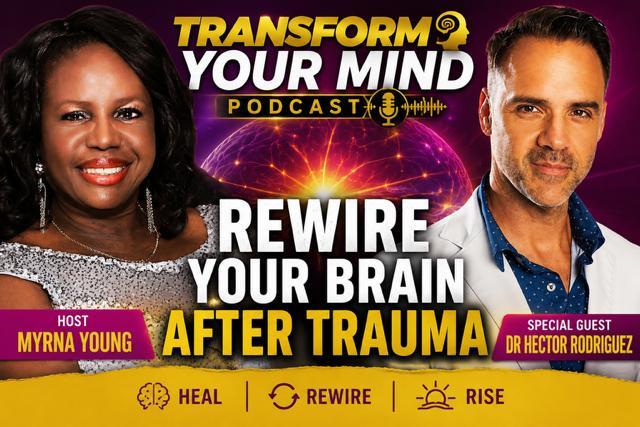
Trauma forces the amygdala (fear center) to overreact and shrinks the hippocampus, but thanks to neuroplasticity, the brain can physically heal. Rewiring the brain after trauma, through consistent therapy, mindfulness, and healthy habits, you can calm fear responses, strengthen the prefrontal cortex (rational thought), and restore emotional safety.
Introduction
Explore the neuroscience of emotional healing and rewiring the brain after trauma with host Myrna Young and guest Dr. Hector Rodriguez. Learn about survival patterns, the impact of trauma on brain activity, and how spirituality plays a role in recovery.
Tune in for practical steps to build mental resilience, rewiring the brain after trauma and how to reclaim your life’s purpose. Perfect for anyone interested in personal growth, trauma recovery and brain health.
Key Takeaways
- Understanding & Awareness: Recognizing that trauma impacts each individual uniquely, creating survival patterns that require conscious effort and understanding to overcome.
- The Role of the Brain: Our brain's intricate workings in response to trauma can shape lifelong patterns, but with the right approach, these can be rewired for healing.
- Intersection of Science and Spirituality: Embracing spirituality can be a profound aid in overcoming trauma, promoting hope and resilience.
Understanding Trauma and Survival Patterns
Trauma has the uncanny ability to inscribe survival patterns deep within our neural networks. Dr. Hector Rodriguez, a notable figure in blending neuroscience with spirituality, explains, “Whenever we get any stressors that occur to us in life, the brain starts learning.” This learning process forms patterns, guiding our responses to future situations.
Understanding these brain-encoded survival patterns is critical. Each individual’s experience of trauma – whether a major life event or a smaller daily stressor – shapes their patterns of reaction. Dr. Rodriguez points out, “It’s difficult to predict what the pattern is going to be, but it definitely creates a pattern of behavior.”
For instance, someone who experienced a significant traumatic event like rape might find their brain recording every sensory detail of it, affecting their reactions to similar environments in the future. This hypervigilance becomes a loop, constantly replayed by the brain as a defense mechanism, even to seemingly non-threatening stimuli.
The broader implication here signals that knowledge and awareness of how these patterns manifest can be a pivotal first step in breaking free from them. Recognizing these patterns is a pathway for effective healing techniques and ultimately rewiring our brain’s responses.
The Brain's Physiological Shift Post-Trauma
Delving deeper, Dr. Rodriguez elaborates on how trauma can literally alter the brain’s physical structure and function. “When it’s emotional trauma, you tend to have a lot of limbic activity,” he explains. This overactivity in the limbic system – the brain’s center for emotions – can dysregulate our responses, keeping individuals trapped in a state of hyper-alertness or avoidance.
The science behind these changes is compelling. With events triggering substantial stress, distinct parts of the brain light up like a “Christmas tree,” as mentioned by Dr. Rodriguez. Each activated area links to specific emotional responses and coping mechanisms. For example, repeated exposure to a traumatic reminder can shift the brain’s default mode, reinforcing fear and anxiety rather than resilience.
Understanding this physiological grounding provides a framework for targeted therapeutic interventions. Specialists like Dr. Rodriguez use tools such as SPECT brain imaging to visualize these changes directly, which not only aids in diagnosing trauma but also helps individuals understand and validate their own experiences. It becomes a powerful motivator for them to engage with healing processes, knowing the tangible altercations in their brain can be rewired.
Rewiring the Brain After Trauma with Mindfulness
Trauma causes the brain to adapt for survival. Healing involves retraining these deeply ingrained neurological pathways through targeted, science-backed interventions:
- Trauma-Informed Psychotherapy: Modalities like Eye Movement Desensitization and Reprocessing (EMDR) and Cognitive Processing Therapy (CPT) help reframe unhelpful beliefs and weaken the link between trauma triggers and panic.
- Mindfulness & Meditation: Regular mindfulness practice literally shrinks an overactive amygdala and grows the hippocampus over time, reversing the structural effects of chronic stress.
- Physical Regulation: Aerobic exercise and vagal toning (such as deep breathing or yoga) release brain-derived neurotrophic factor (BDNF), which promotes neural growth and calms the nervous system.
The Intersection of Science and Spirituality in Healing
A fascinating aspect of the conversation revolves around the symbiotic relationship between science and spirituality in healing trauma. Dr. Rodriguez highlights, “The way we communicate and connect with the spiritual world is actually also a brain function.” This suggests that spirituality might not only be a comforting belief but also a biological component of human resilience.
Dr. Rodriguez emphasizes the critical role spirituality plays in generating hope – a key element in trauma recovery. Spirituality activates the brain’s right temporal lobe, the region associated with hopefulness and resilience. For individuals grappling with trauma, the spiritual approach offers a framework for understanding their experiences beyond physical and temporal limitations. It shifts their perspective from one of victimhood to empowerment, marking a profound turnaround in their healing journey.
The potential impacts are transformative. By integrating spirituality into cognitive therapies, practitioners can guide individuals towards not only processing their trauma but also finding meaning and purpose beyond it. It reframes their mental scripts, moving from survival to thriving.
FAQ's
1. What happens to the nervous system after trauma?
Trauma can keep the nervous system in a heightened state of alert, making it difficult to relax or feel safe. This may result in hypervigilance, emotional overwhelm, sleep problems, or feeling constantly on edge. Healing often involves learning to regulate the nervous system.
2. Can emotional trauma cause chronic pain?
Yes. Emotional trauma has been linked to chronic pain conditions in some individuals. Ongoing stress can increase muscle tension, inflammation, and nervous system sensitivity, which may contribute to persistent pain.
3. Why do trauma survivors often struggle with trust?
4. Can trauma affect digestion?
Yes. Chronic stress and trauma can influence the gut-brain connection, contributing to digestive symptoms such as irritable bowel syndrome (IBS), nausea, bloating, or stomach discomfort.
5. What is complex trauma (Complex PTSD)?
Concluding Reflections on Rewiring the Brain After Trauma
The exploration into trauma, brain functions, and healing underscores a powerful narrative of resilience and transformation. The insights from Dr. Hector Rodriguez illuminate how survival patterns, though deeply ingrained, are not permanent fixtures of our identity. They offer a pathway to understanding and dismantling these patterns through awareness, scientific validation, and spiritual growth.
By acknowledging the profound ways in which trauma reshapes our brains and behaviors, we recognize the substantial effort and commitment required from individuals on their healing journeys. Yet, as highlighted, the blend of science and spirituality provides robust scaffolding, guiding individuals from merely coping to embracing life’s fullest potentials.
The narrative shared in this discussion serves as a testament to human capacity for resilience. The multifaceted approach to trauma offers hope grounded in research and faith. Whether it is through acknowledging the survival patterns, visualizing brain changes via cutting-edge tools like SPECT imaging, or harnessing the power of spirituality, the journey towards healing is illuminated with possibilities for profound personal transformation.
Sponsors of this Podcast
As an entrepreneur, I’ve learned that making it easy for clients to pay you is essential. I personally use Square to accept coaching payments and to collect deposits for my real estate business, and it’s been a reliable part of how I run my business. I also love seeing vendors at the farmers market accept credit card payments with their square hardware. The setup is simple, the payments are secure, and everything is organized in one place.
Additional Resources
- Dr. Hector Rodriguez's Website: whitebutterflyclinic.com
- Dr. Hector Rodriguez's Instagram: @Dr. Hector
- Podcast Transcript
- Rewiring Trauma: Healing the Brain Body Connection