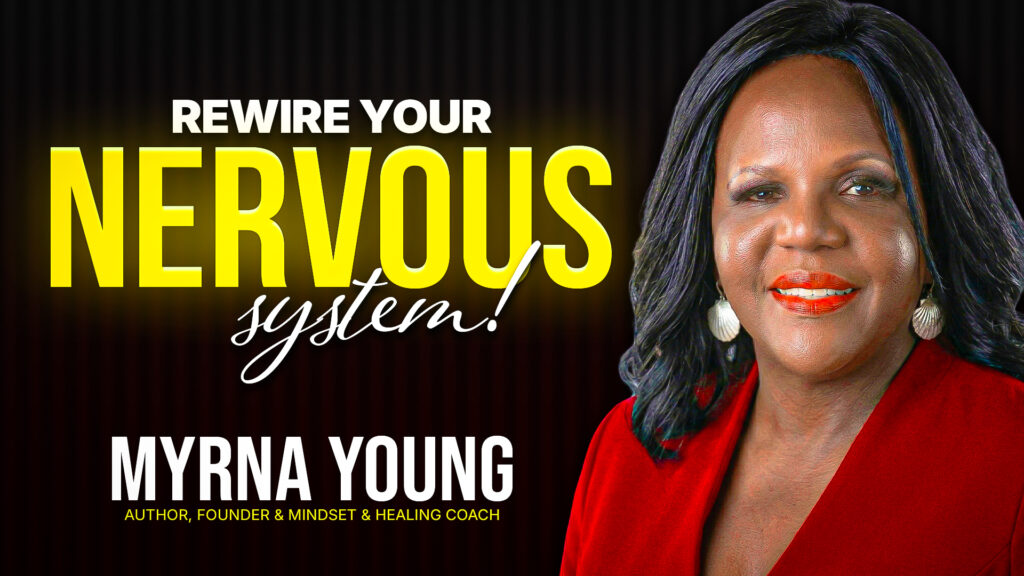
Do you feel stuck in fight, flight, or emotional overwhelm no matter how much you ‘work on yourself’? In this episode of the Transform Your Mind podcast, Coach Myrna discusses how to reset your nervous system. Myrna shares survival stories ingrained in our nervous systems, offering insight into why we react in certain ways. She explores how childhood experiences shape adult behaviors, highlighting the significance of safety in healing and nervous system dysregulation.
Myrna shares practical techniques like breathing exercises and grounding practices to reset your nervous system and encourages listeners to visualize their desired future. This episode emphasizes the shift from survival mode to a life led by safety, allowing for healthier relationships, success, and relaxation.
Nervous system dysregulation is an imbalance between the sympathetic (“fight or flight”) and parasympathetic (“rest and digest”) systems, often caused by chronic stress or trauma. It manifests as anxiety, burnout, mood swings, fatigue, and difficulty relaxing. Treatment involves somatic exercises, deep breathing, and lifestyle changes to restore balance. In this article, you’ll discover 7 proven ways to heal trauma and finally feel safe in your own body.
What Trauma Really Does to Your Nervous System
The “fight, flight, freeze, fawn” responses are automatic, physiological survival mechanisms to perceived danger or trauma, driven by the brain’s amygdala and autonomic nervous system. These responses-ranging from aggressive confrontation (fight) to fleeing (flight), becoming immobilized (freeze), or people-pleasing to avoid conflict (fawn)-are instinctive, not conscious choices.
The Four Trauma Responses: Signs and Examples
- Fight: Involves controlling, attacking, or confronting a threat. Signs include rage, aggressive posture, clenched fists, and a need to overpower, notes Attachment Project, BetterHelp.
- Flight: Involves escaping or avoiding danger. Signs include panic, anxiety, restlessness, racing thoughts, and running away, say Attachment Project and ChoosingTherapy.com.
- Freeze
- Fawn: A mechanism aimed at calming a threat to achieve safety. Signs include excessive people-pleasing, inability to say no, lack of personal boundaries, and trying to appease others.
How Trauma is stored in the Body: How to Reset Your Nervous System
Trauma is stored in the body through a dysregulated nervous system, leading to chronic physical sensations like muscle tension, pain, and fatigue. When trauma is unresolved, the nervous system remains in a fight, flight, or freeze state, resulting in persistent cortisol production, digestive issues, and emotional numbness.
Physical Manifestations of Stored Trauma
- Muscular Tension & Pain: Chronic pain, especially in the hips, shoulders, and jaw, can be a protective response to trapped stress.
- Nervous System Activation: Frequent feelings of being on edge, panic, or hypervigilance.
- Somatic Memory: Trauma is often stored as sensory experiences (images, sounds, smells) rather than a clear memory, causing flashbacks or triggering physical sensations.
- Digestive and Immune Issues: Persistent stress can manifest as digestive troubles and increased vulnerability to infections.
- Hormonal Imbalance: Continued release of adrenaline and cortisol keeps the body in a heightened state of stress.

How to Release Trauma from the Body
Healing often involves somatic approaches designed to help the nervous system feel safe.
Rewriting your nervous system’s stories may seem like a daunting task, but it’s a transformative journey that can lead to a life of freedom, safety, and authenticity. Often, the ingrained survival mechanisms rooted in our childhood experiences continue to impact our adult lives, leading to self-sabotage and emotional turmoil.
Fortunately, these stories aren’t permanent. By understanding and reshaping them, we can embrace peace and success previously considered out of reach.
- Somatic Experiencing: Focuses on releasing stored physical tension.
- Trauma-Informed Therapy: Helps process the somatic memories of trauma.
- Body-Based Practices: Yoga, massage, breathing exercises, and mindfulness can help release chronic tension.
As described by Dr. Bessel van der Kolk, “The body keeps the score,” meaning the body continues to react to past trauma as if it is happening in the present.
Proven Methods to Heal Trauma and Rewire Your Nervous System
Signs Your Nervous System Needs Healing
- Persistent Fatigue or "Wired" Feeling: Even with sufficient sleep, you feel exhausted or, conversely, highly alert and unable to calm down.
- Heightened Anxiety and Panic: Constant worry, high irritability, or frequent panic attacks.
- Physical Ailments: Frequent migraines, chronic muscle pain (especially in the neck/shoulders), and digestive issues like IBS.
- Emotional Numbness or Detachment: A sense of "spacing out," feeling disconnected from your body, or emotional flatness (shutdown).
- Cognitive Dysfunction: Significant "brain fog," memory issues, and trouble making decisions or focusing.
- Sleep Disturbances: Insomnia, restlessness, or waking up feeling unrefreshed.
The Subconscious Protective Mechanism
The human brain is wired for survival, not for thriving in the modern world. As Myrna shared, “Your nervous system learned a story, and that story was designed to keep you alive.” This means that the anxious feeling you get when confronted with love, success, or peace can often be traced back to survival instincts forged during childhood.
The period up till age seven is crucial, as Myrna explains, “all you’re doing is downloading; you’re downloading your environment.” Everything is internalized-whether it’s an unpredictable love, explosive anger, or emotional abandonment.
The repertoire of survival skills like hyper-vigilance, perfectionism, or self-reliance becomes your safety net. But it’s essential to acknowledge that these aren’t conscious choices but involuntary protective responses.
Acknowledging and Honoring Your Past
It’s important to honor these coping mechanisms as they once served an essential function in our lives. Yet, as adults, these strategies may no longer be necessary or beneficial.
“You can’t rewrite your nervous system stories with just your mindset alone. You can’t affirm your way out of survival wiring,” argues Myrna.
The journey begins by recognizing these patterns without shaming yourself for them. Being curious about them helps in the transition, calming your bodily responses and freeing yourself from outdated scripts.

The Role of Somatic Practices in Healing Your Nervous System
Myrna’s insights clarify why mere thoughts or affirmations aren’t enough to heal deep-set survival stories. The body must feel safety on a cellular level. Practices like “slow breathing, which is inhale for four, hold for four, and then exhale for six,” can ground your nervous system and enhance your sense of safety. These somatic methods regulate your body’s stress responses-differentiating between past and present threats.
Placed at the core of this transformation journey is the ability to generate “micro experiences of safety,” as Myrna phrases it. This involves recalibrating your daily routines to include moments where you feel secure enough to be yourself, such as “speaking one honest sentence, resting without earning it, saying no.” Repeatedly exposing yourself to these micro-moments of safety informs your nervous system that the world is no longer as perilous as once perceived.
The 7 Proven Ways to Reset Your Nervous System
#1. Breathwork to Calm Your Body Instantly
- Explain how breath regulates the nervous system
- Example: slow breathing, box breathing
- Benefit: shifts from fight/flight → calm
#2. Somatic Healing (Healing Through the Body)
Key Aspects of Somatic Healing
- Core Principles: The approach focuses on the connection between mind and body, recognizing that emotional trauma is often held as physical tension or somatic sensations.
- Key Techniques: Practices include dance, grounding, pendulation (shifting focus between calm and stressed states), and titration (re-experiencing trauma in small doses).
- Signs of Release: Physical signs that the body is processing trauma include shaking, trembling, sudden emotional shifts, tingling, or feelings of warmth.
- Somatic Experiencing (SE): Developed by Dr. Peter Levine, this specific type of therapy focuses on completing "unfinished survival loops" to bring the nervous system to a lower range of activation.
Trauma lives in the body, not just the mind.
#3. Rewiring Your Thoughts (Mindset Work)
The broader implication of rewriting your stories is the newfound freedom and opportunities it presents. “Imagine waking up and not bracing for the worst,” Myrna muses. Such envisioning exercises center around picturing a reality filled with love, rest, success, and peace-transforming these visions into your new baseline. It becomes an embodiment of the life we desire filled with authenticity and connection, rather than survival and isolation.
When we start to rewire these deep-seated stories from childhood, we unlock potential not just for personal wellbeing but also for enriched relationships, joy at rest, and unyielding peace. It’s not a question of forcing change-but of teaching your nervous system that it’s finally safe to live.
Through present-focused awareness, deliberate somatic practices, and a vision for a more satisfying life, you allow healing to transform you into the best version of yourself.
#4. Creating Safety in Your Environment
Safe relationships are built on trust, mutual respect, open communication, and equality, where both partners feel safe, valued, and empowered to set boundaries without fear of manipulation or abuse. They are characterized by independence, healthy conflict resolution, and support for individual goals rather than control or isolation.
Key Characteristics of Safe Relationships
- Trust and Honesty: Partners feel confident in each other's integrity and do not feel the need to "prove" themselves.
- Respectful Boundaries: Both individuals respect each other's need for space, personal time, and opinions.
- Open Communication: Partners discuss issues openly and listen to one another, expressing emotions without fear of retribution.
- Equality: Decisions are made together, and there is no imbalance of power.
- Physical and Emotional Safety: Freedom from physical violence, coercion, or emotional abuse.
- Active Consent: Sexual and reproductive choices are discussed openly, and consent is freely given and can be revoked.
Warning Signs of Unsafe Relationships
- Control and Isolation: A partner attempts to control who you see, where you go, or your finances.
- Walking on Eggshells: Constantly watching your words or actions to avoid triggering a partner's anger.
- Manipulation and Blame: A partner denies, minimizes, or blames you for their abusive actions.
#5. Regulating Your Nervous System Through Movement
Regulating the nervous system through movement involves using gentle, rhythmic, or intentional physical actions to move from a state of stress (fight/flight/freeze) to safety. Effective techniques include walking, yoga, shaking, stretching, and dancing, which help release stored cortisol and activate the parasympathetic nervous system.
Key Movement Techniques for Regulation
- Rhythmic Exercise: Consistent, moderate activities like walking, cycling, or swimming for 20-30 minutes help "train" the nervous system.
- Somatic Shaking: Gently shaking your hands, arms, or entire body helps discharge built-up tension and "stagnant energy".
- Grounding Movements: Practices like the "palm trace"-tracing your hand while breathing-or deliberate, slow stretching bring focus to the present and signal safety to the brain.
- Trauma-Informed Yoga/Stretching: Gentle, repeated movements combined with breath, such as neck stretches or torso twists, help release tension held in the body.
- Bilateral Stimulation: Techniques like the "butterfly hug" (tapping your shoulders/chest alternatingly) can quickly calm an overstimulated system, as shown in this YouTube video.
- Sensory Engagement: Simple movements like shifting your weight from side to side or dancing can help you feel reconnected to your body, notes Johns Hopkins Medicine.
Principles for Effective Regulation
- Slow Down: When stressed, moving deliberately and slowly sends a "safety" signal to the brain, whereas frantic motion can increase panic.
- Prioritize Gentle Movement: If you are highly stressed, intense cardio can sometimes mimic a panic attack; gentler movement is safer for a delicate system.
- Focus on Sensation: Rather than focusing on calories or muscle fatigue, focus on how the movement feels inside your body.
- Regularity Matters: Even 5-10 minutes of movement daily is more effective than infrequent intense workouts.
#6. How to Reset Your Nervous System Through Connection (Co-regulation)
Resetting your nervous system through co-regulation involves utilizing the calm, stable presence of another person (or pet) to shift from a stressed state to safety. This is achieved by syncing rhythms through shared breath, eye contact, gentle touch, or calm conversation, which lowers heart rates and releases oxytocin, creating a shared sense of safety.
Key Co-regulation Techniques to Reset the Nervous System:
- Mirroring and Proximity: Position yourself side-by-side rather than face-to-face to avoid confrontation, allowing your nervous systems to sync.
- Sync Breathing: Inhale and exhale together with another person, focusing on slowing the breath down to initiate the parasympathetic "rest and digest" response.
- Physical Touch (When Safe): A 6 to 10-second hug or holding hands with a trusted person releases oxytocin, reducing cortisol and signaling safety to the brain.
- Vocal Soothing & Non-Verbal Cues: Use a gentle, lower-volume voice to speak. Make soft eye contact, smile, or use humming to soothe the vagus nerve.
- Active Listening: Engaging in a conversation where you feel truly heard, without judgment or pressure to solve problems, fosters a regulated state.
- Shared Grounding Activities: Walk together, share a meal, or do gentle stretches side-by-side to connect with the environment together.
If a person is unavailable, imagining a safe, supportive person or interacting with a pet can also provide effective co-regulation.
#7. Faith, Surrender, and Inner Peace
Regulating your nervous system through faith and surrender involves shifting from a state of fear-based control to a state of peace-based trust in God, activating the parasympathetic nervous system. By combining intentional prayer, diaphragmatic breathing, and releasing control to a higher power, you can calm chronic stress and trauma responses.
Key Strategies for Nervous System Regulation:
- Surrender Control: Actively release the need to fix everything into God's hands, reducing internal tension and anxiety.
- Deep Breathing and Prayer: Use slow, diaphragmatic breathing (inhaling through the nose, exhaling longer through the mouth) to engage the vagus nerve and promote a state of "rest and digest".
- Stillness and Meditation: Spend time in quiet, "soaking" prayer, meditating on Scripture to rewire the brain towards peace.
- Identify and Release: Identify situations where you are clinging to control and practice turning them over, allowing you to move from fear to faith.
- Grounding with Gratitude: Practice grounding techniques-such as naming things you see, hear, and feel-to anchor yourself in God’s presence when feeling overwhelmed.
These practices help transition from the sympathetic nervous system’s fight-or-flight response to the parasympathetic nervous system’s calming influence. By consistently engaging in these, you can recalibrate your system to find lasting peace rather than reacting with anxiety.
Rewriting and Rehearsing a New Narrative
Cultivating Conscious Awareness
To change these stories, we must become deeply aware of them. “Notice the pattern without shame,” advises Myrna, urging listeners to reflect rather than react instinctively. It’s about asking: “Is this reaction about now, or is it about then?” This mindfulness helps in differentiating between immediate reactions born from historical narratives and the reality of the current situation.
Being conscious about your automatic responses paves the way for integrating new, healthier behaviors. Rather than focusing on erasing the past-an impossible feat-it’s more practical to teach your nervous system that you no longer need hyper-vigilance or one-sided self-reliance to navigate through life. “Thank her and gently take the lead,” Myrna suggests, inviting us to offer gratitude to those survival stories while paving the way for healthier narratives.